
 how-to
How to Avoid Fast Fashion: A Practical Guide for 2026
Last Updated: October 24, 2026
Quick Summary
To avoid fast fashion, audit your wardrobe, stop impulse buying, and shop secondhand, swaps, or small-batch and made-to-order pieces before buying new. Judge brands by their business model, not green marketing, and use cost per wear to choose durable items you will actually wear.
- Fast fashion brands release new styles weekly or faster at rock-bottom prices.
- Check that certifications like GOTS or Fair Trade Certified cover the specific product, not just the parent company.
- A $60 jacket worn 60 times costs $1 per wear; a $15 top worn twice costs $7.50.
- Wait two weeks before buying wish-list items, since most impulse purchases die in that window.
- Wash cold, skip the dryer, and learn basic mending to make clothes last longer.
Table of Contents
- Why Avoiding Fast Fashion Is Harder Than It Looks
- How to Identify Fast Fashion Brands Before You Buy
- Step 1: Audit Your Wardrobe and Stop Impulse Buying
- Step 2: Choose Alternatives to Fast Fashion That Fit Your Budget
- Step 3: Make Secondhand Clothing Your First Stop
- Step 4: How to Make Clothes Last Longer
- Common Mistakes That Undo Your Progress
- Your 90-Day Transition Plan to Avoid Fast Fashion
- Frequently Asked Questions
Why Avoiding Fast Fashion Is Harder Than It Looks
Learning how to avoid fast fashion sounds simple until you try it.
Here's the core problem: fast fashion is cheap because someone else pays the cost. According to the Ellen MacArthur Foundation's work on textiles and the circular economy, clothing production has roughly doubled in recent decades while the number of times a garment is worn has fallen.
That math has to go somewhere. It goes into overflowing wardrobes, textile waste, and supply chains stretched to produce more for less.
So why is quitting so hard?
- Price: A new trend piece costs less than a quality staple up front.
- Speed: New drops land weekly, and algorithms push them at you.
- Convenience: One tap, two-day delivery, no thinking required.
The fix isn't guilt. It's a better system.
Below, we'll walk through how to identify fast fashion brands, how to audit your wardrobe, and how to build a wardrobe you actually keep. The steps are small on purpose.
How to Identify Fast Fashion Brands Before You Buy
Fast fashion brands are retailers built on rapid trend cycles, low prices, and high volume. The tell is usually speed and price together: if a brand drops new styles every week at rock-bottom prices, it's fast fashion. But the labels have gotten smarter. Many brands now use green-sounding language without changing how they produce, so you need to look past the marketing and evaluate claims with a critical eye.
Start with the business model, not the badge
Before you trust any sustainability claim, ask how the brand makes money. A company that releases hundreds of new styles per week and relies on constant discounts is structurally fast fashion, regardless of a "conscious" collection or a recycled-polyester tag. Look for:
- Drop frequency: New arrivals weekly or faster signal a trend-chasing model.
- Price-to-labor math: If a garment costs less than a few hours of minimum wage in the producing country, labor and materials are likely being squeezed.
- Discount dependence: Permanent sales and urgency banners ("only 2 left!") push volume over quality.
Evaluate sustainability claims like an auditor
Greenwashing often hides in vague language. Here's how to separate substance from slogans:
- Certifications with traceability: Look for third-party certifications that require chain-of-custody audits, such as GOTS (organic textiles), Fair Trade Certified, or bluesign (chemical safety). A logo alone isn't enough, check that the specific product is covered, not just the parent company.
- Named factories: Brands that disclose factory names and locations (even partially) are more accountable than those that say only "imported" or "ethically made."
- Supply-chain transparency: A public supplier list, factory audit summaries, or a traceability map are stronger signals than a sustainability page full of nature imagery.
A practical pre-purchase checklist
Run this before you buy:
- Does the brand release new styles weekly or faster?
- Are prices so low that labor and materials can't realistically be covered?
- Does the site list where garments are made, or only "imported"?
- Are there named factories, or just vague "ethical sourcing" claims?
If most boxes are unchecked, treat it as fast fashion until proven otherwise. For a deeper look at spotting unsustainable brands and building a more conscious wardrobe, our blog has more in-depth guidance.
Step 1: Audit Your Wardrobe and Stop Impulse Buying
Start with what you already own. A wardrobe audit shows you what you actually wear, which kills impulse buying fast.
Here's how to do it in one sitting:
- Pull everything out and sort into three piles: wear often, rarely, never.
- Turn every hanger backward. Anything still backward in a month is a "never."
- Count duplicates. Five black tops means you don't need a sixth.
- Note gaps. A missing warm layer matters more than a new trend piece.
- Bag the "never" pile for resale, swaps, or donation.
The goal is a simple rule: buy less, buy better. When you know what you own, the urge to grab a cheap trend piece fades.
Step 2: Choose Alternatives to Fast Fashion That Fit Your Budget
You don't need a huge budget to skip fast fashion. You need a plan. Budget-conscious alternatives to fast fashion come in four main forms, and each has real trade-offs:
| Option | Best For | Watch Out For |
|---|---|---|
| Secondhand and thrift | Low cost, unique pieces | Sizing gaps, wear and tear |
| Clothing swaps | Free refresh of your wardrobe | Requires a group or community |
| Small-batch and made-to-order | Fit, quality, longevity | Longer lead times |
| Custom pieces | Exact fit and one-of-a-kind style | Higher upfront cost |
Make cost per wear your decision tool
Cost per wear is the number that matters. A piece you wear fifty times beats a cheap item worn twice, even if it costs more up front. The formula is simple: divide the purchase price by the number of times you expect to wear it. A $60 jacket worn 60 times costs $1 per wear; a $15 trend top worn twice costs $7.50 per wear.
Budget tactics that actually work
- Set a monthly clothing budget and roll it over. If you don't spend it, save it for a better piece next month instead of buying filler.
- Shop secondhand first for needs, not wants. Make a list of actual gaps (a warm layer, work trousers) and search resale apps and thrift stores before buying new.
- Use clothing swaps as a free refresh. Organize a swap with friends or a local community group; it costs nothing and keeps garments in use.
- Buy fewer, better pieces on a schedule. Replace items as they wear out rather than buying seasonally.
Where made-to-order and custom fit in
This is where made-to-order and custom options earn their place. You buy exactly what you need, sized to you, instead of guessing at standard sizing. At Snarkeez, our custom-made approach means you can order a piece built for your body and style rather than settling for a mass-produced fit. You can browse products to see our exclusive designs, or explore custom designs if you want something made specifically for you.
Step 3: Make Secondhand Clothing Your First Stop
Secondhand clothing is the fastest way to cut your fast fashion footprint, and it's usually the cheapest.
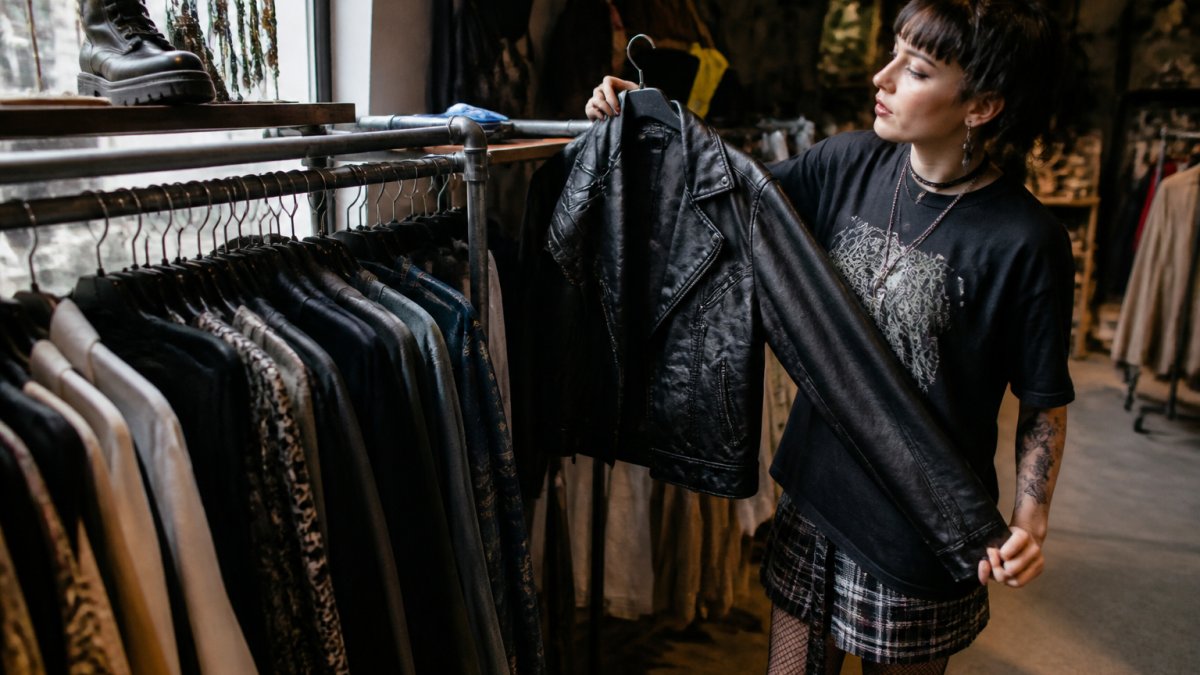
A few habits make secondhand work better:
- Check seams, zips, and underarms before buying.
- Know your measurements, not just your size label.
- Search by fabric, not by trend.
- Set a small budget so you don't overbuy just because it's cheap.
The environmental case is strong. As the UN Environment Programme's research on the fashion industry has documented, extending the life of clothing is one of the most effective ways to reduce its impact.
Secondhand also fits alternative style well. Vintage leather, deadstock fabric, and one-off pieces are exactly the kind of finds that mass-produced fast fashion can't copy.
Step 4: How to Make Clothes Last Longer
Making clothes last longer is the cheapest sustainability move available. Care, repair, and storage do more than any label claim.
Here's a practical routine:
- Wash less. Air garments between wears and spot-clean when you can.
- Wash cold. Heat breaks down fibers and fades dye.
- Skip the dryer when possible. Air-dry to protect shape and stretch.
- Learn basic mending. A needle, thread, and ten minutes fix most hems and seams.
Before you commit to a longer-lasting purchase, check the returns and exchanges policy. Knowing your options takes the risk out of buying better.
Common Mistakes That Undo Your Progress
Even careful shoppers slip. These are the mistakes we see most often:
- Buying on sale just because it's cheap. A discount on something you don't need is still waste.
- Trusting green labels at face value. Look for named factories and fabric details, not slogans.
- Clearing out and rebuying. A full wardrobe reset usually means new overconsumption.
- Ignoring fit. Poor fit means a garment sits unworn, no matter how ethical it is.
One more: treating this as all-or-nothing. You don't have to be perfect. You have to be consistent.
Your 90-Day Transition Plan to Avoid Fast Fashion
A transition plan turns good intentions into habits. Here's a realistic 90-day path:
Days 1-30: Stop and assess
- Do the wardrobe audit.
- Unfollow or mute fast fashion accounts.
- Set a monthly clothing budget.
- Start a wish list with a two-week wait rule.
Days 31-60: Swap your sources
- Shop secondhand first for any need.
- Try one clothing swap with friends.
- Research two small-batch or made-to-order brands.
- Learn one repair skill.
Days 61-90: Build and maintain
- Fill real gaps with durable pieces.
- Track cost per wear on new items.
- Set up a simple care routine.
- Review what worked and adjust.
Want help getting started? You can contact us with questions about sizing or custom orders.
The goal isn't a perfect wardrobe overnight. It's a wardrobe you actually wear, from sources you actually trust.
Frequently Asked Questions
What is the 30-wear rule and how does it help me avoid fast fashion?
The 30-wear rule asks one question before any purchase: will I wear this at least 30 times? If the answer is no, you skip it. It works because it forces you to think about cost per wear instead of sticker price. A cheap top worn twice costs more per wear than a well-made piece worn weekly for two years. Apply the rule to every impulse buy and you naturally buy less, choose durable clothing, and stop feeding overconsumption.
Can I avoid fast fashion on a limited budget?
Yes. Secondhand clothing, clothing swaps, and resale apps give you quality garments at low prices. Thrift shopping and vintage stores often stock natural fibers and durable construction that cost far less than new ethical fashion. Repair and mending extend what you already own, which costs almost nothing. Budget-conscious buyers should prioritize fabric choice and garment quality over brand names, and treat every purchase as an investment measured in cost per wear.
How can I tell if a brand is fast fashion?
Check three things. First, volume: fast fashion brands release hundreds of new styles weekly and push constant sales. Second, transparency: ethical brands publish where and how garments are made, while fast fashion keeps its supply chain vague. Third, materials: a label full of synthetic fibers with no care information signals cheap clothing production built to be replaced. If a brand cannot tell you who made the garment, assume the worst.
Is it possible to avoid fast fashion completely?
Almost nobody manages it perfectly, and that is fine. Shoes, underwear, and specialized gear often come from supply chains you cannot fully trace. The goal is reduction, not perfection. Focus on buying less, choosing durable clothing, shopping secondhand clothing where you can, and making clothes last longer through repair. Small consistent changes across your wardrobe beat an all-or-nothing approach that collapses after a month.
Fast fashion is built to keep you buying, and breaking that cycle takes a plan, not perfection. Snarkeez makes the switch easier with custom-made, dystopian-inspired pieces built for self-expression, not trend cycles. Our made-to-order approach means a fit built for your body, and our one-of-a-kind designs mean you won't blend into the crowd. Get started with Snarkeez and build a wardrobe that actually says something.
