 how-to
How to Style Dark Outfits Without Looking Flat
Last Updated: October 25, 2026
Quick Summary
Dark outfits look flat because of fit, not color, so fix the silhouette first by defining one point, breaking the vertical, and varying volume. Then separate shades of black with texture and finish, and lift the look with one light element like a white collar or metallic accessory.
- Define one point, break the vertical, vary the volume, and check the hem to balance proportions.
- Separate shades of black by texture and finish, not just tone, so the contrast shows.
- Brighten an all-black outfit with one light element, not three, so the eye has somewhere to rest.
- Layer smoothest fabric closest to the body and roughest on the outside to add depth without bulk.
- Navy, chocolate brown, and moss green all read as dark and bring warmth black can't.
Table of Contents
- Start With Fit and Silhouette Before Anything Else
- How to Style Different Shades of Black in One Outfit
- How to Brighten Up an All-Black Outfit
- Texture and Layering: Making Dark Outfits Look Rich
- All-Black Outfit Ideas You Can Copy This Week
- Dark Academia Outfit Ideas for Everyday Wear
- Dark Outfits Beyond Black: Navy, Chocolate, and Moss
- Choosing Your Next Statement Piece at Snarkeez
- Frequently Asked Questions
Start With Fit and Silhouette Before Anything Else
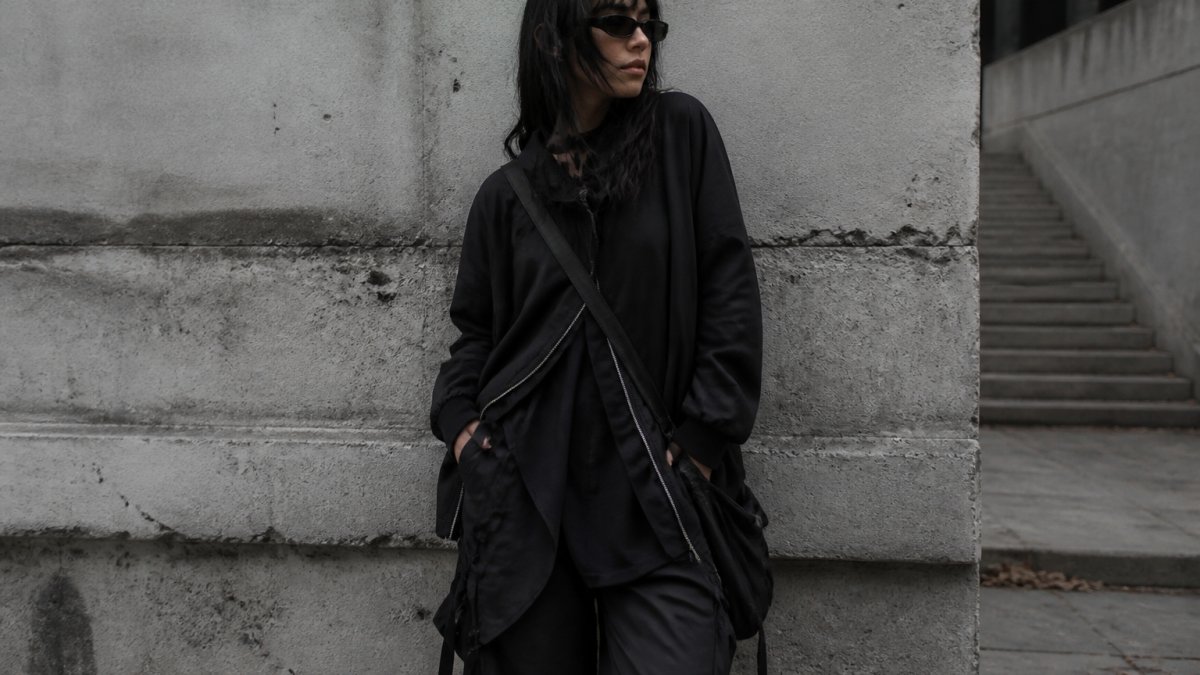
Most people think dark outfits look flat because of color. They're wrong. The real culprit is fit. A black outfit that clings in the wrong places or hangs shapeless will read as a dark blob, no matter how good the fabric is.
Fit is about three things: shoulder line, waist definition, and hem length. Nail those and the rest follows.
Here's a quick formula for balancing proportions in an all-black look:
- Define one point. Pick a waist, a shoulder, or a hem and make it the sharpest line in the outfit.
- Break the vertical. A tucked shirt, a belt, or a cropped jacket stops the eye from sliding straight down.
- Vary the volume. If the top is loose, the bottom should be fitted, and vice versa.
- Check the hem. Cropped, ankle-length, or full-length all work, but they need to match your shoe height.
A common mistake is buying everything in one oversize cut because "monochrome is supposed to be easy." It isn't. Dark outfits need shape to look intentional. The fix is simple: treat each piece like it has a job, and let one item lead.
Watch out: a long black coat over wide black trousers over black boots can swallow your whole frame. Break the line with a belt or a cropped layer.
How to Style Different Shades of Black in One Outfit
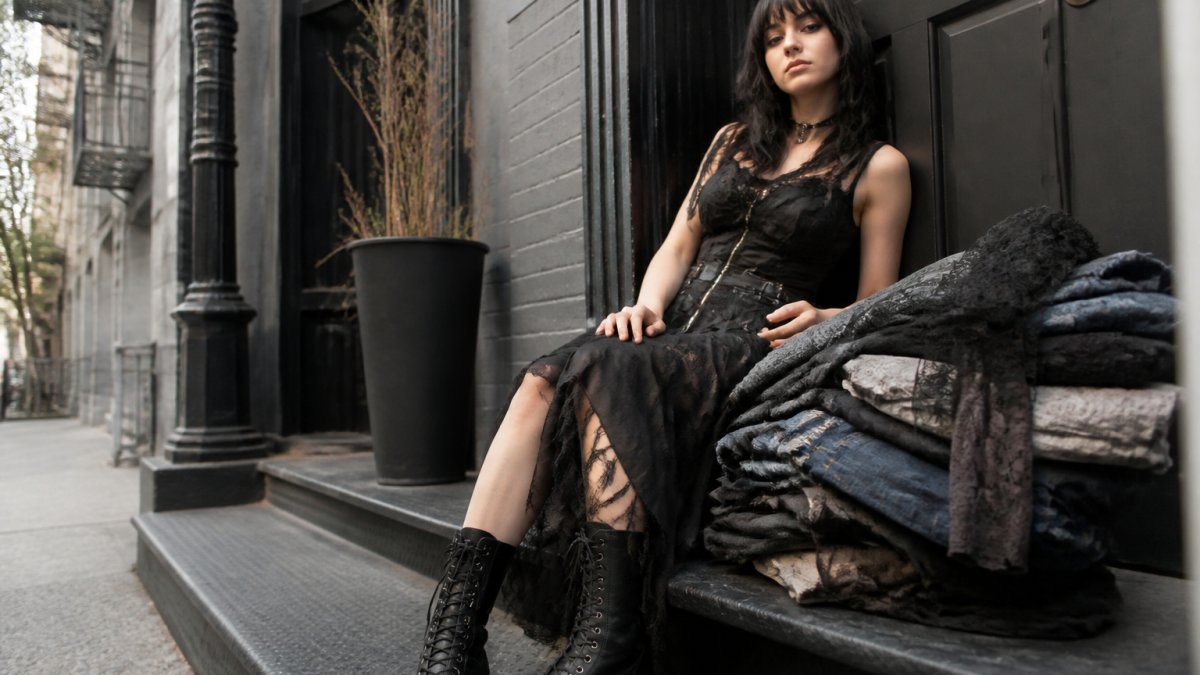
Different shades of black in one outfit work when you separate them by texture and finish, not just tone. True black, charcoal, and washed black sit close enough that the eye reads them as one family. But the contrast only shows up when the fabrics differ.
Think of it as a value ladder. Put your darkest, most matte piece at the base and work outward toward lighter or shinier finishes.
- Matte black absorbs light and reads as the deepest tone.
- Washed or faded black looks softer and slightly grey next to true black.
- Satin and sheen reflect light and push a piece visually lighter.
- Charcoal is the safest bridge shade between black and grey.
The trick is to place these near each other. A matte black shirt under a washed black overshirt gives you a quiet contrast. Swap the overshirt for satin and the same outfit reads as evening wear. Same palette, different mood.
If you're coming from a wardrobe of identical black basics, expect the first few mixes to feel odd. That's normal. Give it a week.
How to Brighten Up an All-Black Outfit
An all-black outfit brightens through contrast, not color. You can lift a dark look with a single light element: a white poplin shirt collar, a taupe bag, a metallic shoe, or a reflective finish that catches the light. The point isn't to add a bright color.
Start with the smallest possible change. A white collar peeking out of a black jacket does more than a whole white top. A sand-toned belt breaks the waistline. A metallic bag adds a moving highlight as you walk.
Here's how we'd rank the options by impact:
| Brightening move | Effort | Effect on the look |
|---|---|---|
| White collar or cuff showing | Low | Crisp, sharp contrast |
| Metallic or reflective accessory | Low | Catches light, adds movement |
| Taupe or sand bag or belt | Medium | Softens the whole palette |
| Grey or charcoal layering piece | Medium | Adds depth without breaking the dark mood |
| One navy or moss green item | High | Shifts the outfit to a new palette |
The reflective route is the boldest. If you want to test this idea, a reflective mini dress shows exactly how sheen and light-catching finishes lift a dark look without a single bright color.
Watch out: adding three light elements at once scatters the eye. Pick one and let it lead.
Texture and Layering: Making Dark Outfits Look Rich
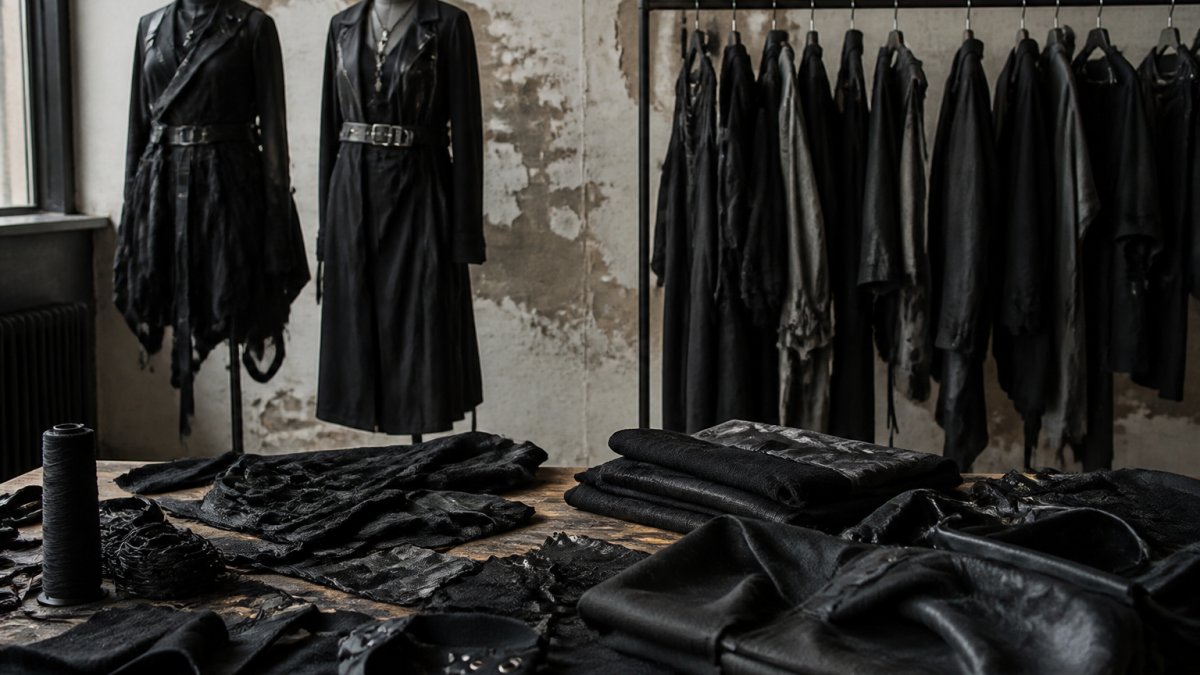
Texture is what separates a flat dark outfit from one that looks expensive. When every piece is the same fabric, the eye has nothing to grab onto.
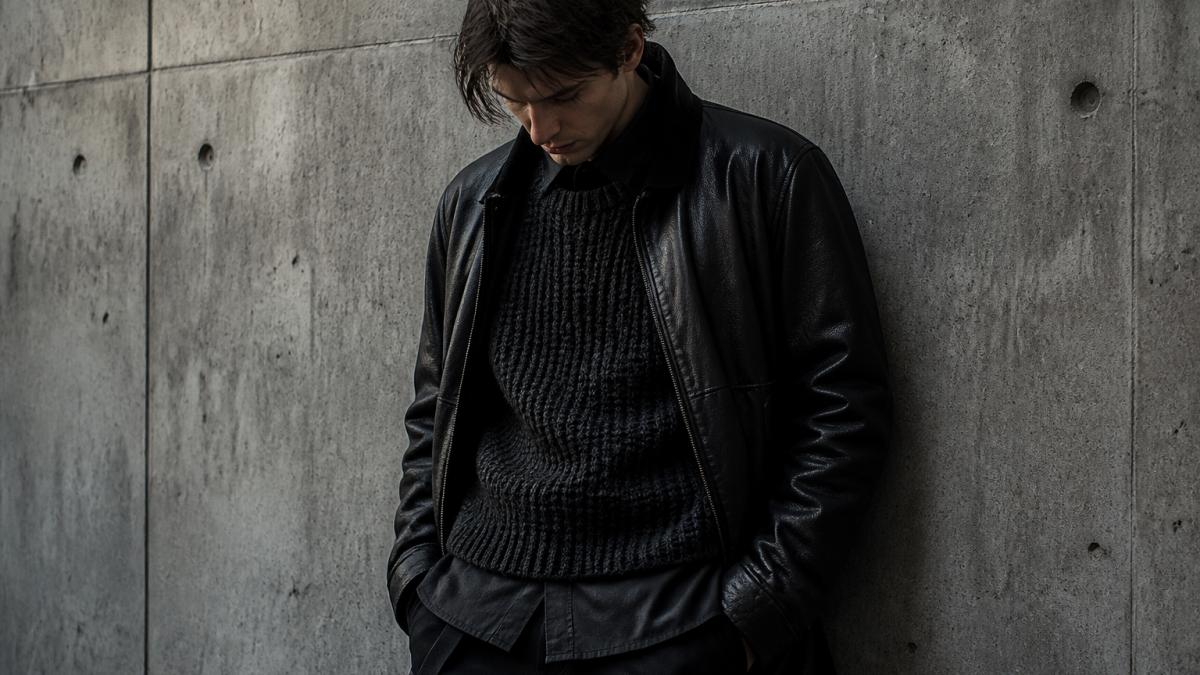
The layering order matters. Put the smoothest fabric closest to the body and the roughest on the outside. A jersey base, a poplin mid-layer, and a leather or wool overshirt on top gives you three distinct surfaces in one look.
A few texture pairings that work every time:
- Knit plus leather. Soft against hard, the classic dark pairing.
- Poplin plus jersey. Crisp against soft, good for everyday wear.
- Mesh plus matte. Sheer against solid, adds depth without weight.
- Wool plus satin. Rough against smooth, reads as evening wear.
Mesh is the easiest way to add a texture layer without heat or bulk. A mesh top sits over a jersey base and gives you a sheer surface that breaks up a solid block of black.
All-Black Outfit Ideas You Can Copy This Week
The fastest way to build an all-black outfit is to start from a formula, not a blank closet. Here are five you can copy this week, each built around pieces most dark wardrobes already have.
- The everyday base. Fitted black jersey top, straight black trousers, black boots. Add a belt to define the waist.
- The layered look. Black poplin shirt, black knit vest, black wide-leg trousers. Roll the cuffs to show a lighter inner layer.
- The evening shift. Black satin slip over a black jersey long-sleeve, black heeled boots. The satin does the work.
- The structured look. Black blazer, black fitted top, black midi skirt, black tights. Sharp shoulder line, soft hem.
- The relaxed version. Black overshirt open over a black tee, black jeans, chunky boots. Keep the overshirt unbuttoned to break the vertical.
Each of these works because it defines one line and varies the texture. If you want a ready-made starting point, a little black dress is the most versatile base in any dark wardrobe. Build the layers around it and you have five outfits from one piece.
The mistake most people make is treating "all-black" as one outfit. It's a palette. The formula is what makes it wearable.
Dark Academia Outfit Ideas for Everyday Wear
Dark academia works for everyday wear when you keep the palette dark but the shapes practical. Think plaid, knit, collared shirts, and structured skirts, styled so they move with you rather than feeling like a costume.
A simple everyday formula:
- Base: a collared shirt in black, grey, or cream.
- Middle: a knit vest or a fine-gauge sweater.
- Bottom: a pleated or skater skirt, or tailored trousers.
- Outer: an overshirt or a long coat.
- Shoes: loafers, oxfords, or lace-up boots.
The plaid is what signals the aesthetic most clearly. A black plaid skater skirt gives you the pattern and the silhouette in one piece, and it pairs with almost any dark top you already own. Keep the rest of the outfit plain so the plaid leads.
If you're worried about looking costume-y, strip it back. One dark academia element per outfit is enough. A plaid skirt with a plain black knit reads as styled. A plaid skirt with a vest, a bow tie, and a blazer reads as a costume. The line between them is restraint.
Dark Outfits Beyond Black: Navy, Chocolate, and Moss
Dark outfits don't have to be black. Navy, chocolate brown, and moss green all read as dark, and each one brings a warmth that black can't. This is the angle most styling guides skip, and it's the one that makes a dark wardrobe feel bigger than it is.
- Navy blue is the closest swap for black. It reads dark in low light but looks softer and richer up close. Navy and black together is a strong pairing, not a clash.
- Chocolate brown adds warmth. It works best with taupe, sand, and cream, and it makes black look sharper by contrast.
- Moss green is the boldest of the three. It pairs well with grey and charcoal and gives a dark outfit an earthy edge.
The rule for building a palette is to pick one dark base and one neutral. Navy with grey, chocolate with sand, moss with charcoal. Then add texture the same way you would with black. A monochromatic look in navy follows the exact same logic as an all-black outfit: define the fit, vary the fabric, add one point of contrast.
This is where a dark wardrobe stops feeling repetitive. Rotate your base color by season and the same formulas keep working.
Choosing Your Next Statement Piece at Snarkeez
A statement piece is the item that carries the outfit, and choosing one is easier when you know what it needs to do. At Snarkeez, we build pieces around that idea: custom-made apparel for people who want their dark wardrobe to say something, not blend in.
Before you commit to a piece, run it through this checklist:
- Does it work with at least three outfits I already own?
- Does it add a texture or finish my wardrobe is missing?
- Does the fit define a line, or does it hang shapeless?
- Can I wear it in more than one season?
- Does it feel like me, or like a trend I'll tire of?
If a piece fails two or more of these, it's not a statement piece. It's a purchase you'll regret. The pieces worth buying are the ones that make the rest of your wardrobe work harder.
One more thing about care: dark clothes fade fastest when washed hot and dried hard. Turn them inside out, wash cold, and air dry where you can. A dark wardrobe that keeps its depth is a dark wardrobe that keeps looking rich.
Most dark wardrobes fail for the same reason: too many pieces, too little contrast, and no clear statement item to anchor the look. Fixing that starts with one piece that does real work.
Frequently Asked Questions
How do you make an all-black outfit look more interesting?
Mix at least three fabric textures in one look, such as a poplin shirt under a jersey knit with a leather jacket on top. Add one non-black accent, like a taupe belt, silver hardware, or a grey scarf, to break up the flatness. Vary the shades of black between pieces so the eye has something to separate. Fit matters too: a tailored waist against a loose trouser creates shape that a uniform black column hides.
What colors go well with dark outfits?
White, taupe, grey, sand, navy blue, chocolate brown, and moss green all sit comfortably next to black and other dark tones. These neutral colors add contrast without fighting the mood of the outfit. For a softer look, pair dark pieces with cream or oatmeal. For more depth, layer chocolate brown or navy against black. Avoid adding too many accent colors at once; one or two is enough to lift a dark outfit.
How do you style different shades of black in one outfit?
Put the darkest shade on the largest piece, usually trousers or a dress, and use lighter charcoal or faded black on the layers above. Keep the fabrics different so the shade shift reads as intentional rather than a laundry mistake. A faded black tee under a jet-black overshirt is a simple starting point. Check the pieces in daylight before you leave, because indoor lighting hides the difference between shades.
How can you make a dark outfit look polished rather than flat?
Focus on three things: fit, texture, and one point of contrast. Make sure the shoulders and waist sit correctly, because a dark outfit shows every proportion error. Add a textured layer such as a knit, leather, or ribbed jersey. Then introduce a single contrast, like a white collar, a metallic buckle, or a taupe bag. Press or steam your pieces before wearing them; creases make dark fabric look worn rather than styled.