 how-to
How to Measure for Custom Clothing That Fits Right
Last Updated: October 25, 2026
Quick Summary
To measure for custom clothing, take five core numbers over thin clothing with a soft tape kept snug but not tight: bust or chest, waist, hips, inseam, and height. Record each figure as you go and re-measure anything that seems off. Custom clothing is only as good as the numbers you feed it.
- You need a soft flexible tape measure, a mirror or helper, and fitted clothing before you start.
- Measure your natural waist at its narrowest point and your hips at the fullest part of the seat.
- Your waist-to-hip ratio helps predict how a skirt will hang; most people fall between 0.7 and 0.9.
- A custom dress also needs shoulder width and shoulder-to-hem length measured to an exact hem point.
- Re-measure every six to twelve months, or after any significant change in weight, training, or health.
Table of Contents
- Why Accurate Measurements Make or Break Custom Clothing
- How to Take Body Measurements for Clothes: The Basics
- How to Measure Waist and Hips for a Skirt
- How to Measure for a Custom Dress
- Your Custom Clothing Measurement Chart Explained
- Common Measuring Mistakes to Avoid
- How to Measure Yourself for Snarkeez Custom Pieces
- Frequently Asked Questions
Why Accurate Measurements Make or Break Custom Clothing
Custom clothing only fits when the numbers behind it are right. A single wrong measurement can turn a made-to-order piece into something you never wear, and that is the quiet reason so many people give up on custom fashion after one bad order.
Here is the core problem. Ready-to-wear sizing assumes a "standard" body that barely exists. Custom clothing flips that. It builds the garment around your actual shape, which means the tape measure is doing more work than the design.
For readers who also care about where their clothes come from, our guide on how to avoid fast fashion pairs well with this one.
How to Take Body Measurements for Clothes: The Basics
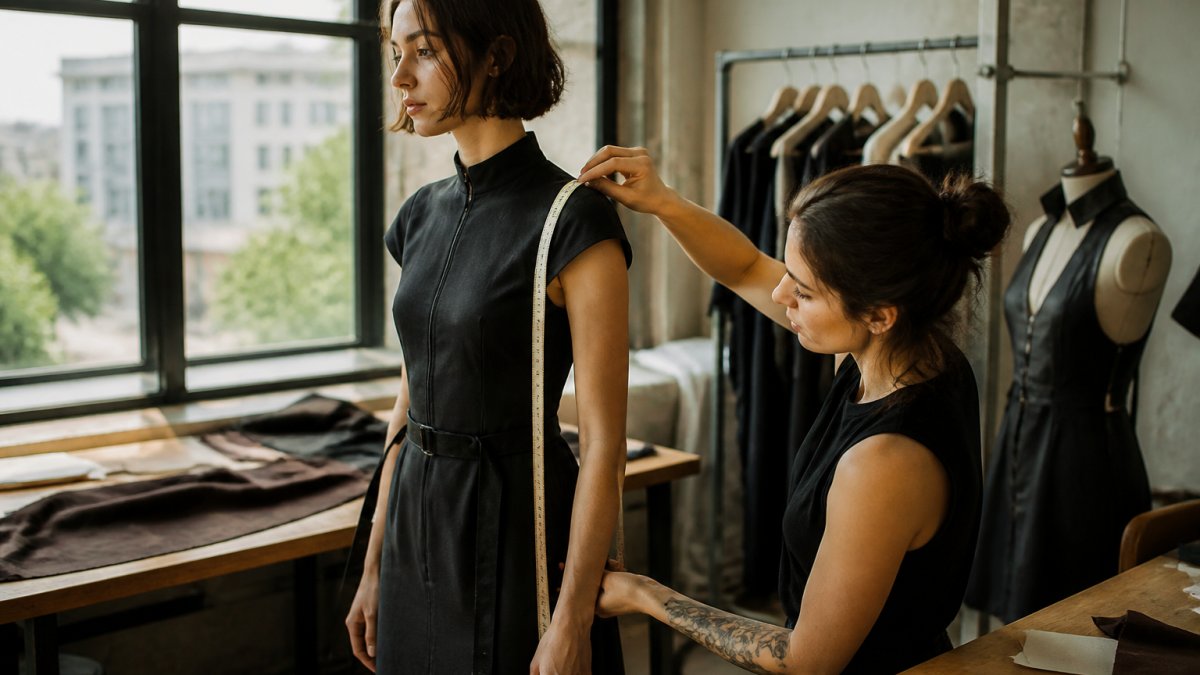
Body measurements for clothes are the set of numbers, taken around and along your body, that a tailor uses to build a garment to your shape. You need five core numbers for most pieces: bust or chest, waist, hips, inseam, and height. Take them over thin clothing, keep the tape snug but not tight, and stand relaxed.
What You Need Before You Start
- A soft, flexible tape measure, not a rigid ruler
- A mirror, or a second person to help
- Fitted clothing or underwear, not bulky layers
- A notebook or phone to record each number
- Flat shoes, since heels change your height and posture
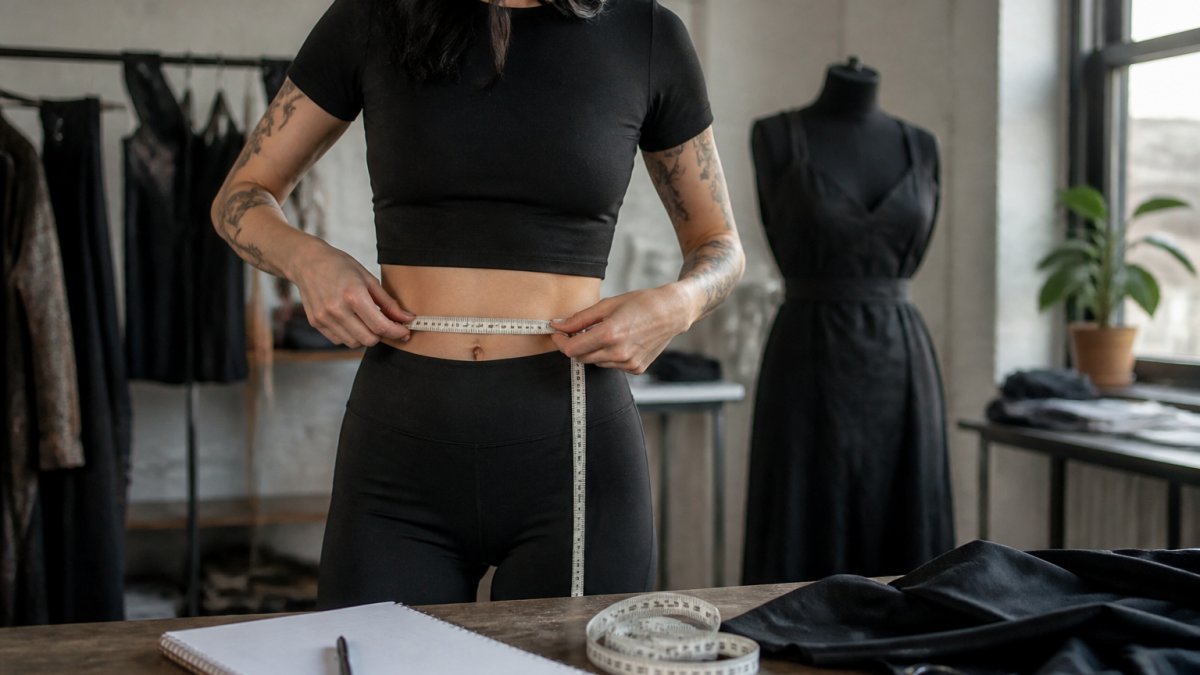
Step-by-Step Measurement Guide
- Bust or chest: Wrap the tape around the fullest part of your chest, level under the arms. Keep it parallel to the floor.
- Waist: Find your natural waist, the narrowest point above your belly button. Breathe out normally and measure.
- Hips: Measure around the fullest part of your hips and seat, usually a few inches below the waist.
- Inseam: Run the tape from your crotch down to where you want the hem to sit.
- Height: Stand against a wall, flat-footed, and mark the top of your head.
Write each number down as you go. Re-measure any figure that seems off before you move on.
How to Measure Waist and Hips for a Skirt
Waist and hips are the two numbers that decide whether a skirt sits right, but the real skill is translating those numbers into a silhouette that flatters your build. Measure your natural waist at its narrowest point, then measure your hips at their fullest point, usually around the seat. See the Seeing Eye Glitter Pencil Skirt to apply these measurements to a concrete skirt.
A few details matter here. Measure your waist on bare skin or thin fabric, never over a tucked shirt. For hips, stand with feet together so the tape follows your true shape. If you are between two numbers, round up slightly for comfort, since a tailor can take in fabric but cannot add it.
Using Waist-to-Hip Ratio to Choose a Skirt Silhouette
The gap between your waist and hip measurements is your waist-to-hip ratio, and it is the single most useful number for predicting how a skirt will hang. Most people fall between 0.7 and 0.9. If your hips are significantly fuller than your waist (a lower ratio), A-line and full-circle skirts will skim over the hip rather than cling, while a straight pencil skirt may need a vent or stretch panel to sit without pulling. If your waist and hips are closer in size (a higher ratio), pencil and bias-cut skirts tend to drape more naturally, and you can carry volume at the hem without looking boxy.
Skirt Length and Proportion
Skirt length is not just a style choice; it changes your visual proportions. A hem that lands at the fullest part of your calf can make your legs look shorter, while a hem just above or below the knee keeps the line clean. For a floor-length skirt, measure from your natural waist to the floor in flat shoes, then subtract half an inch so the hem clears the ground. For a midi, measure to the midpoint between knee and ankle. Write down the exact hem point you want, not just "midi" or "long," because those words mean different things to different makers.
Common Waist and Hip Measuring Mistakes
- Measuring the waist over a belt or waistband, which adds bulk
- Letting the tape dip at the back, which adds phantom inches to the hip
- Pulling the tape so tight it compresses the skin
- Taking the hip measurement at the wrong point (it should be the fullest part of the seat, not the hip bones)
Skirts are unforgiving about the waist-to-hip difference. If your hips are much fuller than your waist, note that gap. It tells the maker where to add shaping.
How to Measure for a Custom Dress
A custom dress needs more numbers than a skirt because it spans your whole frame. Measure bust, waist, hips, shoulder width, and the length from shoulder to hem.
Dress length is where most people guess. Decide where you want the hem to fall first, then measure to that exact point. A floor-length gown and a knee-length dress need very different numbers from the same body.
If the dress has sleeves, measure your arm length from shoulder to wrist and your upper arm around its fullest point. You can see a real custom dress example in the Tengu One Of A Kind Dress.
Your Custom Clothing Measurement Chart Explained
A custom clothing measurement chart is a simple record of your body numbers, organized so a maker can build from it. Each row is one measurement, each column is one number in your chosen unit. Keep it updated, because bodies shift with weight, age, and training.
| Measurement | Where to Measure | Common Mistake |
|---|---|---|
| Bust or chest | Fullest part, under arms | Tape too low or slanted |
| Waist | Narrowest point | Measuring over clothing |
| Hips | Fullest part of seat | Tape pulled too tight |
| Inseam | Crotch to hem point | Guessing the hem length |
| Shoulder | Edge to edge across back | Measuring only the front |
Fill this chart once, save it, and reuse it for every order. It becomes your personal sizing profile. When a maker asks for your numbers, you hand over the chart instead of scrambling for a tape measure.
Beyond the Numbers: Fit Preferences and Fabric Behavior
A measurement chart captures your body, but it does not capture how you like clothes to feel. Add a notes column for fit preferences: "loose at the waist," "fitted through the arm," "extra length in the torso." These notes matter as much as the numbers, because two people with identical measurements can want very different fits.
Fabric also changes how a measurement translates into a garment. A crisp cotton poplin holds its shape, so a waist measurement taken snug will stay snug. A fluid viscose or jersey drapes and stretches, so the same number may feel tighter or looser depending on the weave.
Keeping Your Custom Pieces Looking New
Custom clothing is an investment, and dark or structured fabrics need care to stay sharp. Wash dark custom pieces inside out in cold water to slow fading, and skip the dryer for anything with elastane or a tailored shape, since heat breaks down stretch fibers and shrinks wool. Use a lint roller on dark fabrics before wearing, and store structured pieces on wide hangers so shoulders keep their line. If a piece has a lining, turn it inside out to air it between wears rather than washing after every use.
Updating Your Chart Over Time
Re-measure every six to twelve months, or after any significant change in weight, training, or health. A chart that is two years old is a guess, not a measurement. Keep the date at the top of the chart so you know when it was last updated, and note any measurement that changed by more than an inch, since that is the one most likely to affect fit.
Common Measuring Mistakes to Avoid
The biggest measuring mistake is holding the tape loose or letting it slant. A tape that droops at the back adds phantom inches, and a slanted tape gives a number that fits nothing. Other frequent errors: measuring over bulky clothes, pulling the tape so tight it digs in, and guessing length instead of measuring it.
Watch out: measuring your waist while holding your stomach in gives a number the finished garment will not match. Breathe out and stay relaxed.
A few more to dodge:
- Measuring alone without a mirror, so you cannot see if the tape is level
- Using a stiff or stretched-out tape measure
- Recording numbers from memory instead of writing them down
- Taking measurements in heels when you plan to wear flats
How to Measure Yourself for Snarkeez Custom Pieces
At Snarkeez, custom means built to your numbers, not relabeled standard sizing. When you order a custom piece, send us your full measurement chart: bust, waist, hips, inseam, height, and any length notes.
Here is how we would approach it. Take your measurements twice on different days to catch errors. Explore our custom designs or browse one-of-a-kind custom items built around your measurements.
Custom clothing is only as good as the numbers you feed it. Measure carefully, record honestly, and the piece you get back will fit like it was made for you. That is the whole point.
Frequently Asked Questions
Should I measure myself wearing clothes or underwear?
Measure yourself in form-fitting clothing or underwear. Bulky garments add inches and distort the numbers. If you are measuring for a custom dress or skirt, wear the undergarments you plan to wear with the piece. For tops, a thin t-shirt works. Consistency matters: measure the same way each time so your custom clothing measurement chart stays accurate.
How tight should the measuring tape be when taking body measurements?
The tape should sit snug against your body without compressing your skin. You should be able to slide one finger under the tape. If it leaves a mark, it is too tight. For waist and hips, keep the tape parallel to the floor. A loose tape adds inches; an overly tight tape subtracts them. Both lead to a poor fit in custom clothing.
What measurements do I need for a custom-made skirt?
For a skirt, you need your waist, hips (at the fullest point), and desired skirt length. Also measure your hip depth (the distance from waist to hip) for high-waisted styles. If the skirt has a waistband, note where you want it to sit. These numbers let a maker draft a pattern that hugs your shape without gaping or pulling.
Can I take my own measurements for custom clothing?
Yes, but it takes care. Use a mirror to check tape placement, or ask a friend for the hard-to-reach spots like back length and shoulder width. For the most accurate custom clothing, retake each measurement twice and compare. If the numbers differ, adjust your technique. Self-measuring works well for skirts and dresses; for tailored jackets, a second pair of hands helps.
Getting a custom piece to fit starts with a tape measure and a few honest numbers. At Snarkeez, we build dystopian, one-of-a-kind apparel around your exact measurements, so nothing is guessed and nothing is standard. Our custom-made pieces, including our hexed dresses and unique ensembles, are crafted to your shape and your style. Get started with Snarkeez and order a piece that fits your body and your rebellion.