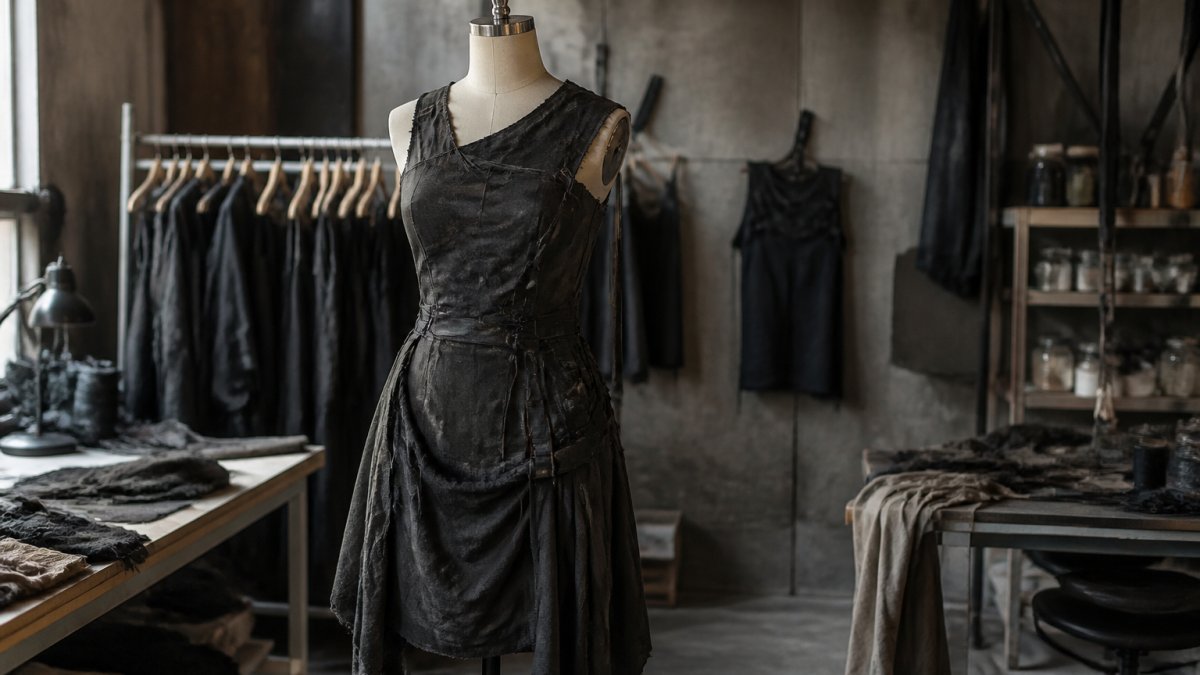
 how-to
Are Custom Dystopian Dresses for Women Worth It?
Last Updated: November 1, 2026
Quick Summary
Custom dystopian dresses are worth it when fit, fabric, and structure matter, because they are built to your measurements instead of a mass-produced size run. Custom dystopian dresses let you match details like mock necks and high slits to fabrics that actually support them, avoiding the fit compromises of fast fashion.
- Start a dystopian outfit with one strong anchor dress, not five competing loud elements.
- Midweight fabric of roughly 6-9 oz/yd² is the sweet spot for holding a mock neck and slit.
- A high slit needs 4-way stretch with strong recovery or the edge curls and gapes.
- A structured dystopian gown with layered mesh is an advanced sewing project, not a beginner one.
- A from-scratch structured build often costs as much as ordering a made-to-measure piece.
Table of Contents
- Why Custom Dystopian Dresses for Women Beat Off-the-Rack
- Dystopian Outfit Ideas That Actually Work
- How to Style a Dystopian Dress Without Looking Costume-y
- Fabrics, Silhouettes, and Details That Read Dystopian
- DIY Dystopian Clothes: When to Make It Yourself
- How Snarkeez Handles Custom Fit and One-of-a-Kind Design
- Ordering Your Custom Dystopian Dress From Snarkeez
- Frequently Asked Questions
Why Custom Dystopian Dresses for Women Beat Off-the-Rack
Custom dystopian dresses are designed and built to your measurements, silhouette preferences, and vision of a ruined-future aesthetic, not pulled from a mass-produced size run.
Mass-market "alt" fashion has quietly become fast fashion with a darker palette: standardized silhouettes, cost-driven fabrics, and sizing that assumes a body that mostly doesn't exist. You end up tailoring the garment yourself or living with the gap at the waist.
The Problem With Fast-Fashion Dystopian Looks
The dystopian aesthetic depends on structure: asymmetric hems, layered mesh, a mock neck that sits right, a high slit that falls where it should. None of that survives a one-size-fits-most production line. A common mistake is buying three cheap pieces hoping they'll layer cohesively, then discovering the proportions fight each other.
What Custom Really Means for Fit and Identity
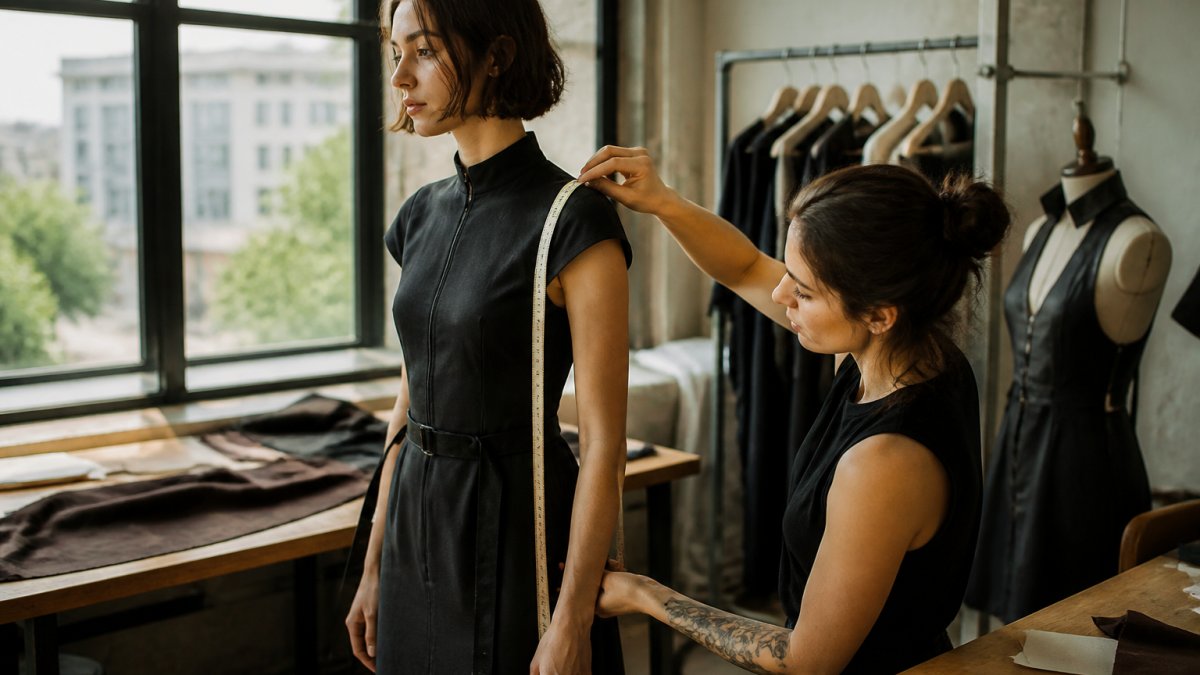
Custom pieces can start from your measurements rather than a size chart, which changes how a garment drapes and where seams land. To get measurements right before ordering, our guide on how to measure for custom clothing that fits right walks through the exact points to record.
Dystopian Outfit Ideas That Actually Work
The best dystopian outfit ideas start with one strong anchor piece and build outward, not with five loud elements competing for attention. A single structured dress carries a whole look.
Cyberpunk, Goth, and Post-Apocalyptic Starting Points
- Cyberpunk: sharp tailoring, technical fabrics, a mock neck or high collar, utility details. Think sleek and synthetic, not shredded.
- Goth: lace, sheer overlays, long lines, dark elegance. The drama comes from texture and silhouette, not from piling on accessories.
- Post-apocalyptic: layering, asymmetry, weathered finishes, belts and straps that look functional. Solar punk is the lighter cousin here, trading grit for reclaimed and botanical textures.
If you want to build a full capsule rather than one outfit, our breakdown of how to build a dystopian wardrobe goes deeper into mixing these starting points.
How to Style a Dystopian Dress Without Looking Costume-y
The difference between dystopian fashion and a cosplay costume comes down to restraint and grounding. One dramatic element per outfit, styled with real-world pieces, reads as fashion. Three at once reads as a Halloween party.
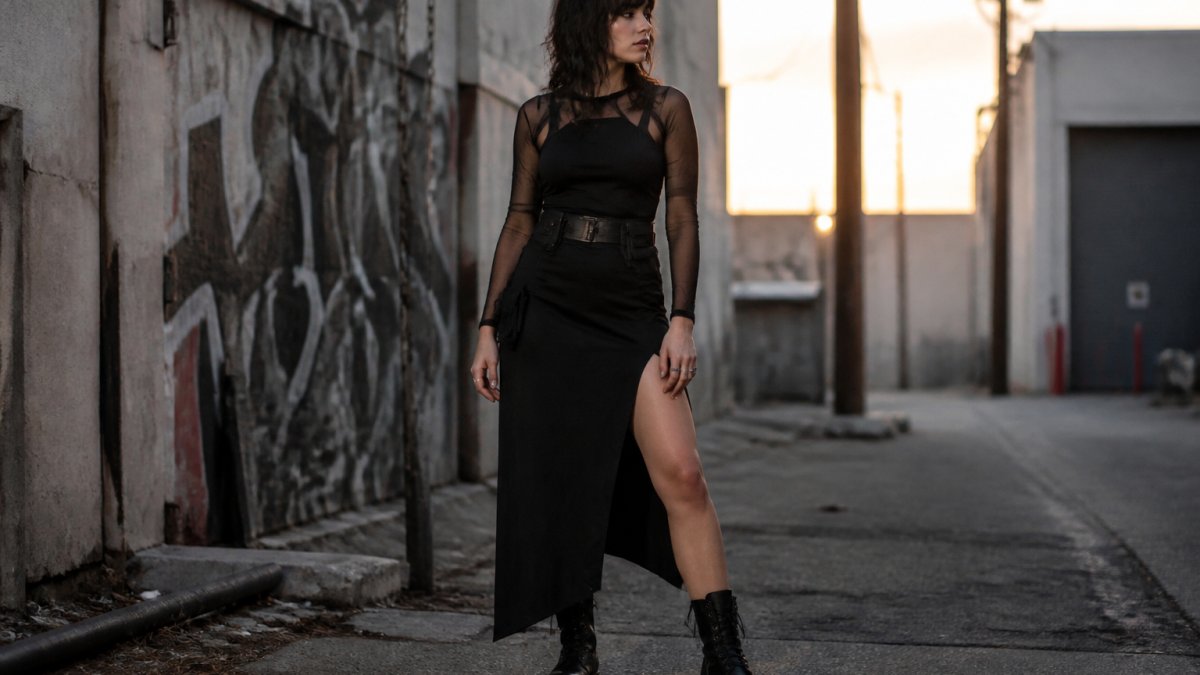
How to style a dystopian dress so it feels authentic:
- Pick one focal point. A high slit means a quiet neckline; a dramatic mock neck means skip the statement jewelry.
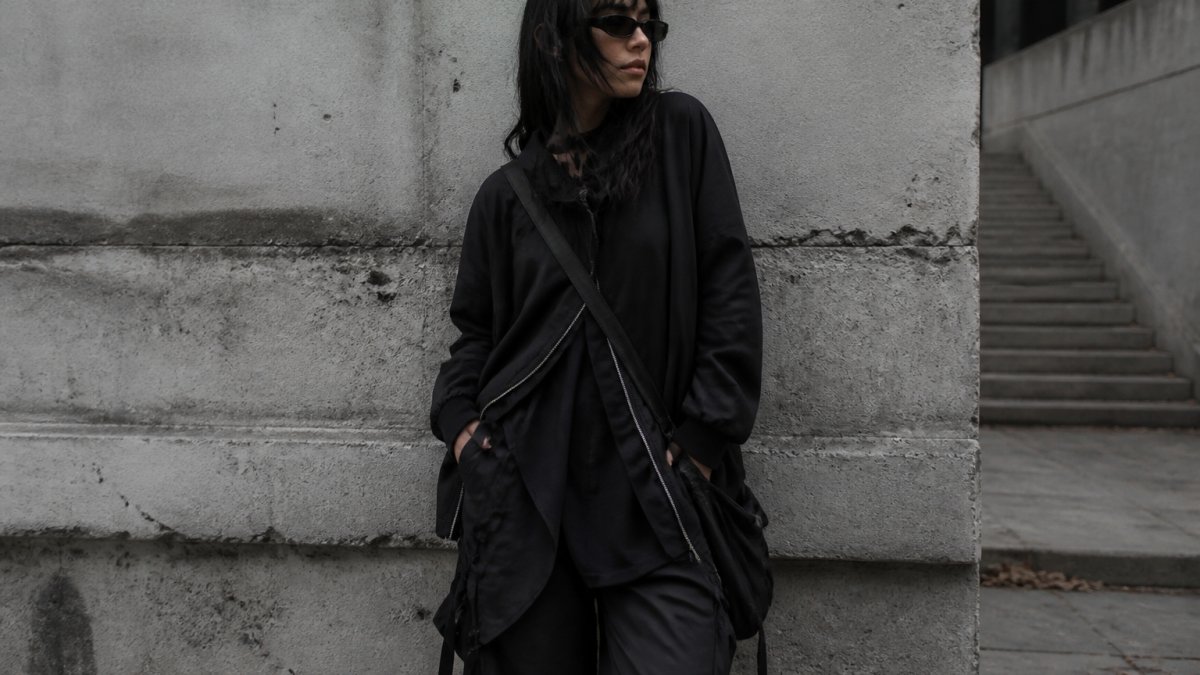
- Ground it with ordinary pieces. A plain longline cardigan, opaque leggings, or a simple boot pulls an extreme dress into daily wear.
- Match the finish, not the theme. Matte fabrics read serious; shiny fabrics read costume.
Over-accessorizing is the fastest way to push a dystopian dress into costume territory. If you're debating a fifth add-on, remove one instead.
Fabrics, Silhouettes, and Details That Read Dystopian
Fabric choice does more for the dystopian read than any single design detail. Mesh and sheer overlays create depth; matte jersey and structured knits hold shape; lace adds shadowy texture without shine; heavy stretch fabrics support a gown silhouette without sagging. But "dark fabric" isn't a specification, weight, stretch, and drape decide whether a dress reads as designed armor or as a costume.
Fabric Weights and What They Do
Fabric weight is usually given in grams per square meter (GSM) or ounces per square yard. You don't need to memorize numbers, but the categories matter:
- Lightweight (roughly 3-5 oz/yd²): sheer mesh, chiffon, lightweight lace. Overlay fabrics that add depth and shadow but no structure, they need a base layer or lining.
- Midweight (roughly 6-9 oz/yd²): matte jersey, ponte, double knit, midweight lace. The sweet spot: enough body to hold a mock neck and a slit, enough stretch to move, and a matte finish that reads serious.
- Heavyweight (roughly 10-14+ oz/yd²): structured knits, heavy ponte, coated or technical fabrics. These hold a gown silhouette and support hardware without sagging, but they're warmer and less forgiving of fit errors.
Stretch, Recovery, and Durability
Stretch percentage and recovery matter as much as weight. A knit with 4-way stretch and good recovery snaps back after wear; a cheap 2-way stretch bags at the knees and seat by evening's end. For a fitted dystopian dress, look for at least 4-way stretch in the bodice and recovery that returns to shape. Durability is the other half: exposed seams, hardware, and straps stress fabric, so a tight-gauge midweight knit outlasts a loose, thin one every time.
Silhouettes and What They Demand
Silhouette matters just as much as fabric, and each silhouette carries construction consequences:
| Silhouette | Dystopian Read | Fabric Demand | Best For |
|---|---|---|---|
| Mini dress | Edgy, rave, festival | Midweight stretch knit; holds shape without lining | Layering with leggings and boots |
| Midaxi dress | Dark elegance, everyday wear | Matte jersey or ponte; drapes without clinging | Street styling, transitional weather |
| Futuristic gown | Avant-garde, statement | Heavyweight structured knit or lined woven; supports boning and hardware | Events, photoshoots, cosplay |
| High slit | Shadowy chic, dramatic | 4-way stretch with strong recovery; needs a finished slit edge | Evening looks with minimal accessories |
A high slit is the detail most likely to fail in a cheap fabric: without recovery, the slit edge curls and gapes. A mock neck is the detail most likely to fail in a soft fabric: without body, the collar slumps. Match the detail to the fabric, not the reverse.
Details That Separate Designed From Printed
Look for mock necks, sleeveless cuts, asymmetric hems, exposed seams, and hardware like straps or D-rings, the construction choices that separate a designed piece from a printed one. Exposed seams need a serger or deliberate flat-felled finish; hardware needs interfacing or a reinforced backing so it doesn't tear through lightweight fabric. Ask how a detail is finished, not just whether it's present.
Fit and Accessibility Considerations
A dystopian dress is still a dress, and it has to work on a real body. Three fit points decide most of the experience:
- Bust and underbust support: a structured bodice needs boning or a supportive underlayer; a stretch bodice needs enough recovery to hold without a bra.
- Waist placement: a seam at your natural waist reads intentional; one an inch off reads as a fit error, especially in high-contrast dark fabric.
- Mobility: a high slit, mock neck, and fitted skirt each restrict movement differently. Test a seated position and a full stride before committing to a final design.
Accessibility matters too. If you use a wheelchair, a cane, or a prosthetic, slit height, hem length, and closure placement should be designed around your movement rather than adjusted after the fact. A custom build is the right place to solve that, a size chart never will.
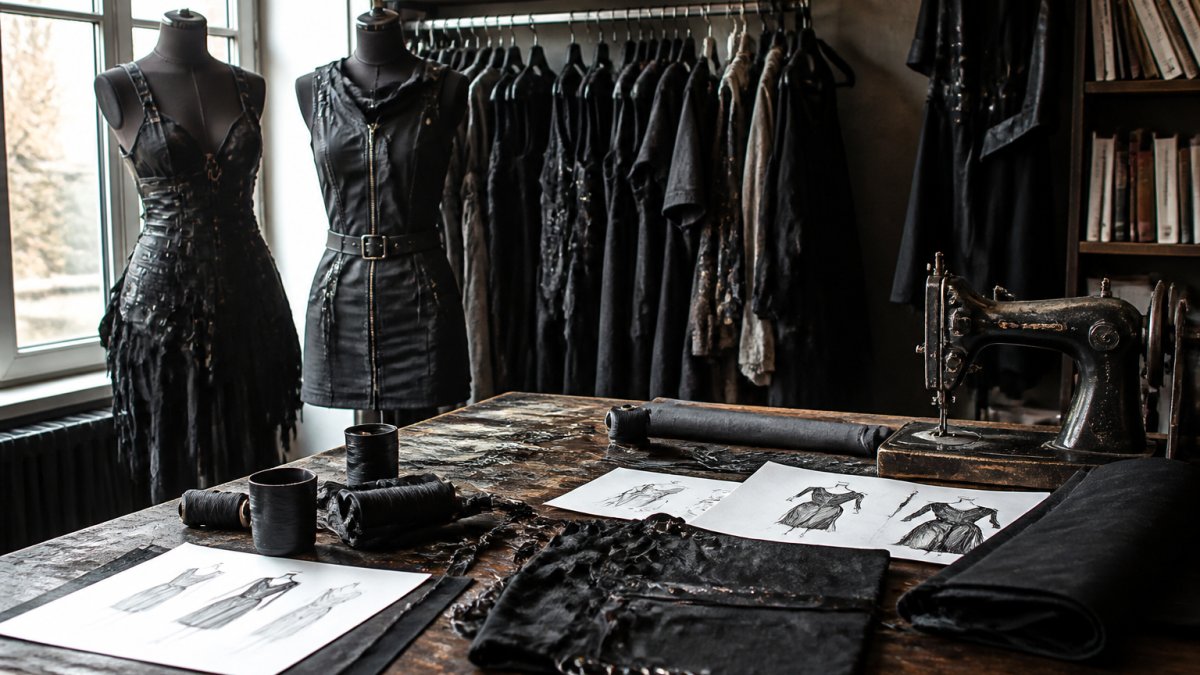
If you want to see how these fabric and silhouette choices come together in finished pieces, browse the actual custom items one of a kind collection.
DIY Dystopian Clothes: When to Make It Yourself
DIY dystopian clothes make sense when you're altering, upcycling, or adding detail to something that already fits. They stop making sense when you're trying to build a structured garment from scratch with no pattern experience. The useful question isn't "can I make this?" but "which parts of this garment can I realistically make well, and which parts should be built for me?"
A Realistic Skill Ladder
Most home sewists progress through recognizable stages. Placing yourself honestly on this ladder prevents the most common and most expensive mistake: starting a structured build before you can reliably finish a seam.
- Beginner (first 6-12 months): hemming, taking in a waist, shortening sleeves, straight seams on woven fabric. Projects are alterations and simple overlays.
- Intermediate (1-3 years): installing zippers, lining a bodice, sewing stretch fabrics with a ballpoint needle, following a commercial pattern unaided. You can attempt a simple knit dress.
- Advanced (3+ years): drafting or significantly altering a pattern, fitting a muslin, working with sheer and slippery fabrics, and constructing a lined, structured garment with boning or interfacing.
A structured dystopian gown with a fitted bodice, asymmetric hem, and layered mesh is advanced. A midaxi knit dress with a mock neck and a slit is intermediate.
Upcycling, Thrifting, and Simple Alterations
The highest-return DIY projects are small ones, and they're where the dystopian aesthetic actually rewards reuse:
- Thrift a long dress and add a mesh overlay at the sleeves. A yard of stretch mesh runs roughly $6-$15; a thrifted base dress $5-$20. The cheapest way to add depth and shadow.
- Take in the waist of a structured dress that's close but not right. Two side seams and a re-set waistband transform a garment for the cost of thread and an hour.
- Add hardware, straps, or a removable belt to change the silhouette. D-rings, parachute buckles, and webbing are sold by the yard at craft and outdoor-supply stores; a removable harness-style belt can be built for under $25 in materials.
When DIY Stops Being Cheaper or Better
A common mistake is underestimating the true cost of a from-scratch build. Pattern drafting, muslin tests, and fabric waste add up fast, and the first attempt rarely fits. Here's the honest math most tutorials skip:
- Pattern: $10-$25 commercial, or 4-10 hours of drafting time from measurements.
- Muslin/toile fabric: $10-$30 for a test garment you won't wear.
- Final fabric: $20-$80+ depending on mesh, matte jersey, structured knit, or specialty technical fabric. Sheer and slippery fabrics often need more yardage due to layout waste.
Add it up and a from-scratch structured build frequently lands in the same range as ordering a made-to-measure piece, before counting the value of your time or the risk of a failed first attempt. DIY wins clearly on alterations, upcycling, and detail work. It wins less clearly on structured gowns, fitted bodices, and one-of-a-kind event pieces, where the pattern has to be built to your body rather than adjusted toward it.
If you're weighing the DIY path against a made-to-measure piece, our guide on how to measure for custom clothing that fits right gives you the measurement baseline either route depends on.
How Snarkeez Handles Custom Fit and One-of-a-Kind Design
Snarkeez offers custom-made and one-of-a-kind apparel, including hexed dresses and statement ensembles.
You can browse the actual custom items one of a kind collection to see what's possible before you commit to a design.
Ordering Your Custom Dystopian Dress From Snarkeez
If you're ready to start, explore the custom designs section of the Snarkeez website.
Pricing depends on the design, materials, and construction involved. Visit the Snarkeez website or contact the team for current prices or a quote.
Frequently Asked Questions
What makes a dress look dystopian?
A dystopian dress usually combines dark colors, unexpected textures, and a silhouette that feels slightly off from everyday fashion. Sheer fabric, mesh panels, lace, high slits, mock necks, and asymmetric cuts all push a dress toward dystopian. The key is restraint: one or two strong design elements, not every edgy detail at once, so the piece reads as intentional rather than costume-like.
Can you customize a dystopian dress to fit your measurements?
Custom dystopian dresses are available from Snarkeez as custom-made and one-of-a-kind pieces. Confirm current sizing options, turnaround times, and return terms with the brand before ordering for a specific event.
How can you make a dystopian dress look less like a costume?
Balance the drama with real-world styling. Pair a sheer or high-slit dress with opaque leggings, flat boots, or a structured cardigan instead of adding more costume elements. Keep accessories to one statement piece, like a single choker or a utility belt, and choose matte fabrics over shiny ones for daytime. The goal is a dress that feels like your wardrobe, not a rental costume.
Where can you find custom dystopian dresses for women?
Look for independent brands that offer made-to-measure or one-of-a-kind pieces rather than standard dropshipped sizing. Snarkeez offers custom dystopian fashion, including hexed dresses and unique ensembles. Check the brand's sizing process, production timeline, and return policy before ordering.
The gap between a dystopian look that works and one that reads as a costume almost always comes down to fit and restraint. That's the problem we built Snarkeez to solve: custom-made dystopian apparel, designed to your measurements, produced as one-of-a-kind pieces, and built for people who'd rather express themselves than blend in. Get started with Snarkeez and wear something that's actually yours.