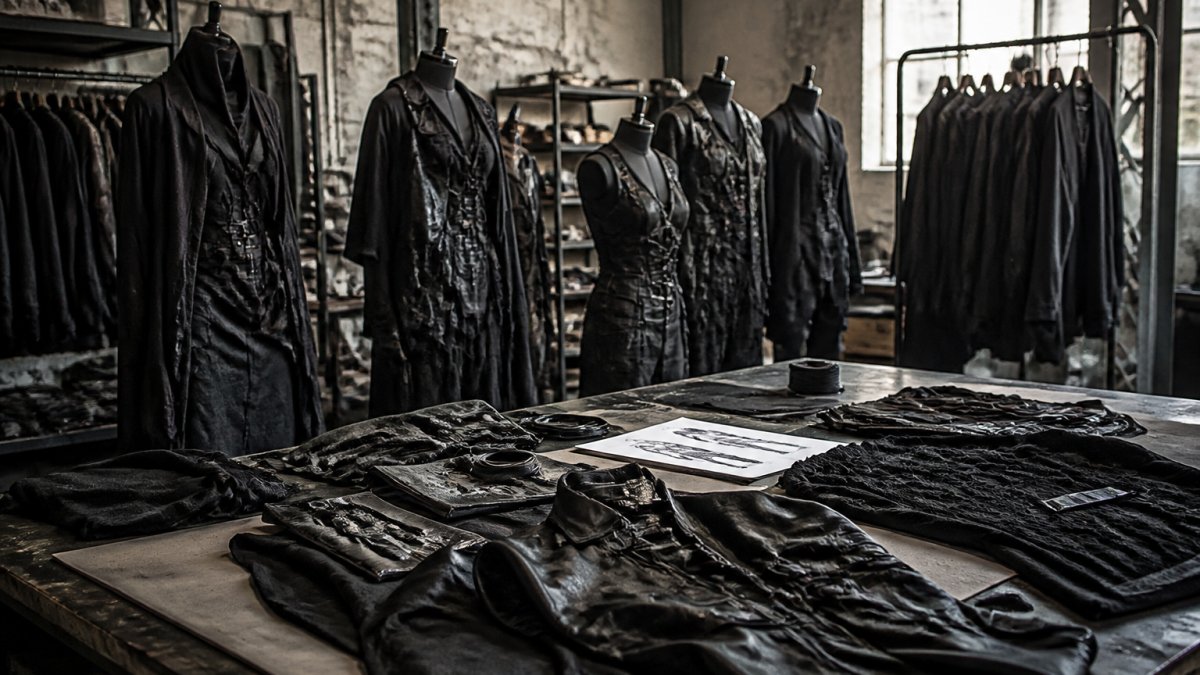
 ultimate-guide
How Do You Build a Dystopian Wardrobe?
Last Updated: October 25, 2026
Quick Summary
Build a dystopian wardrobe as a system, not a shopping list: pick three anchors (one silhouette, one palette, one texture), then build outward. A dystopian wardrobe uses muted color, heavy layering, distressed texture, and utilitarian detail so pieces read as functional and weathered.
- Choose dark base layers first, since bright white or saturated colors break the palette instantly.
- Build one setting formula fully before starting the next for a more convincing look.
- Test every distressing technique on an inside seam or thrifted test piece first.
- Buy boots, base layers, and structural pieces new; thrift denim, leather, knitwear, and belts.
- Make your first statement piece outerwear or a full look rather than an accessory.
Table of Contents
- Start With a Dystopian Wardrobe Framework, Not a Shopping List
- The Dystopian Fashion Essentials Every Base Layer Needs
- Post-Apocalyptic Outfit Ideas by Setting and Character
- DIY Dystopian Fashion: Distressing and Modifying Without Ruining the Garment
- Building a Dystopian Winter Outfit That Actually Keeps You Warm
- Sourcing on a Budget: What to Buy, What to Thrift, What to Skip
- Choosing Your First Snarkeez Statement Piece
- Frequently Asked Questions
Start With a Dystopian Wardrobe Framework, Not a Shopping List
Most people who want to know how to build a dystopian wardrobe start by buying things. That is the mistake. A dystopian wardrobe is a system, not a haul, and the pieces only work together when you decide the rules before you spend a penny.
Here is a framework we recommend: pick three anchors (one silhouette, one palette, one texture), then build outward. A dystopian wardrobe is a clothing system built on muted color, heavy layering, distressed texture, and utilitarian detail, designed to read as functional and weathered rather than decorative. Get the anchors right and every later purchase slots in. Get them wrong and you own a pile of costumes.
If you want a running start on direction, our dystopian fashion trends guide maps the current aesthetic landscape before you commit to pieces.
The Dystopian Fashion Essentials Every Base Layer Needs
Dystopian fashion essentials start at the skin, not at the coat. The base layer does the quiet work: it holds the silhouette, keeps you warm under heavy outerwear, and gives the eye a rest between louder pieces. Choose thin fabrics in muted tones, fitted rather than baggy, and long enough to tuck. A dark long-sleeve top, a close-fitting tank, and a pair of sturdy leggings cover almost every outfit formula below.
Watch out: base layers in bright white or saturated color break the palette instantly and cannot be fixed with accessories. Buy dark first, experiment second.
Post-Apocalyptic Outfit Ideas by Setting and Character
Post-apocalyptic outfit ideas work best when you name the setting first, because the setting dictates the silhouette, the level of distress, and the gear.
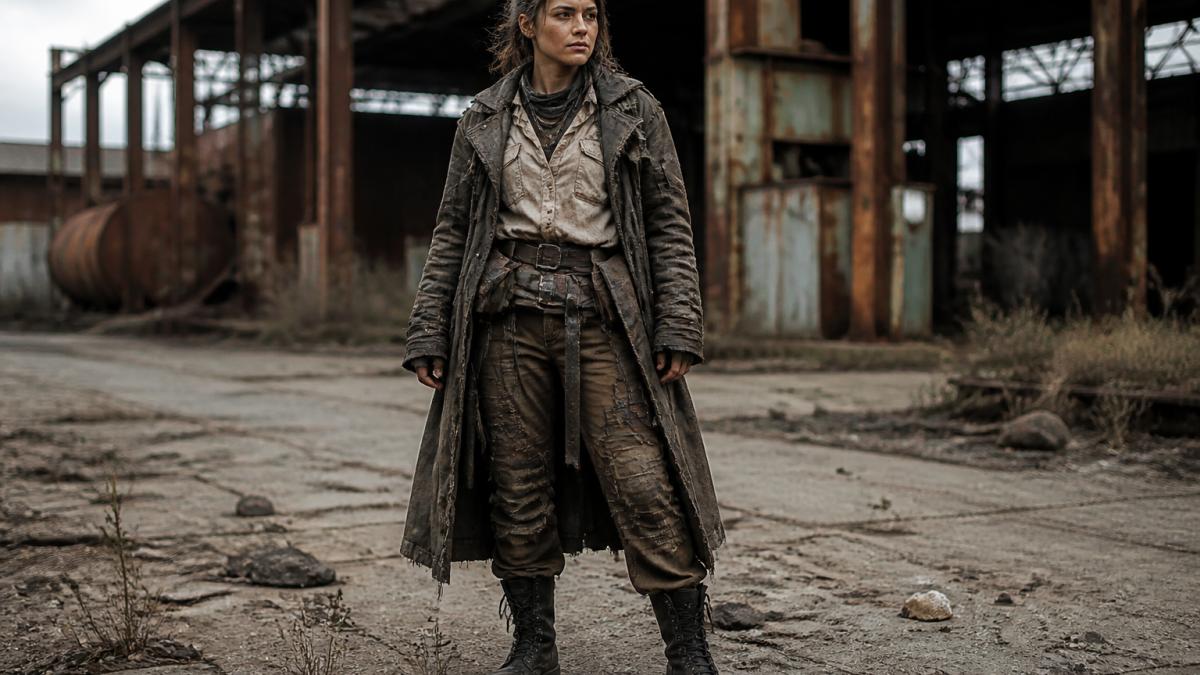
How to read these formulas: each one lists a base layer (skin-adjacent, fitted, dark), a mid layer (texture and coverage), an outer layer (silhouette and weather protection), and a finish (the detail that signals the character).
- Wasteland scavenger, Base: dark fitted long-sleeve and sturdy leggings. Mid: patched denim jacket or canvas overshirt. Outer: ragged-hem duster or poncho. Finish: improvised gear, strapped boots, a belt with pouches, wrapped forearms. Distress level: high. Palette: dust, rust, faded olive.
- Industrial worker, Base: grey or charcoal jumpsuit or coveralls. Mid: heavy gloves and a leather belt with pouches. Outer: none, or a cropped utility jacket. Finish: visible seams, reflective strips removed or muted, scuffed boots. Distress level: medium. Palette: concrete grey, oil black, safety orange used sparingly.
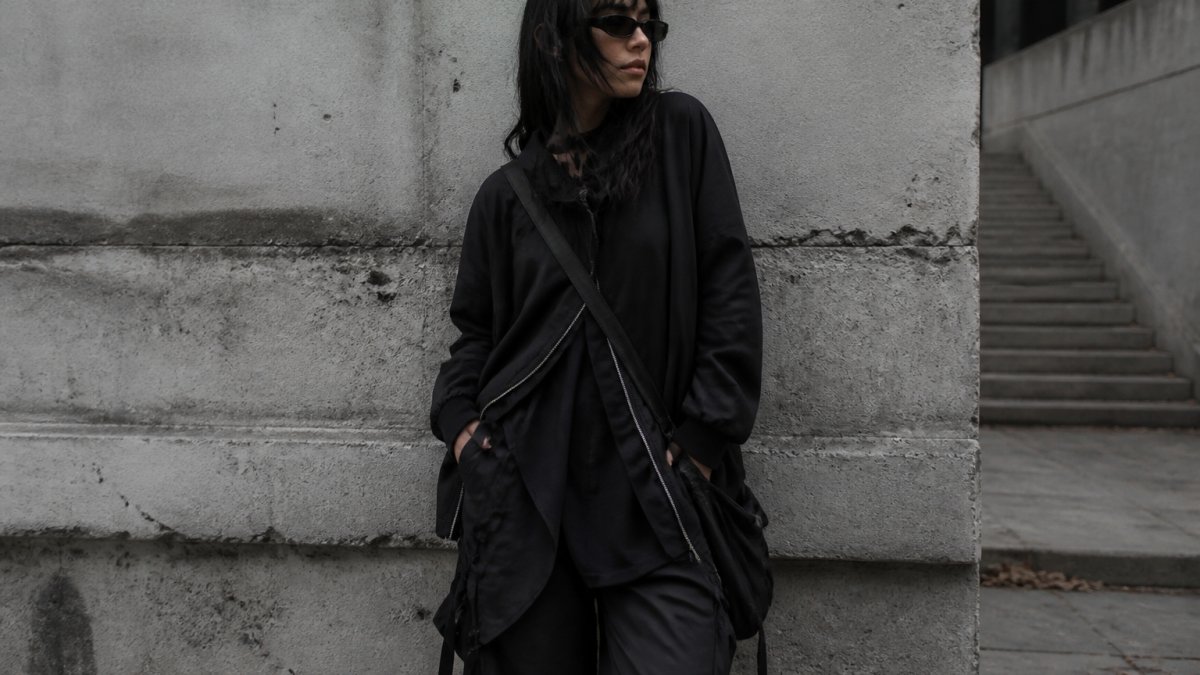
- City survivor, Base: fitted monochrome layers in black or charcoal. Mid: utility vest with pockets. Outer: long dark coat, clean-lined. Finish: boots that read as protective, minimal jewelry, a single improvised strap. Distress level: low. Palette: near-black, slate, cold grey.
- Winter drifter, Base: thermal top and leggings. Mid: bulky knit sweater or fleece. Outer: long dreadcoat or insulated parka. Finish: wrapped scarf, insulated boots with real tread, gloves. Distress level: medium. Palette: brown, cream, muted green.
- Underground community, Base: soft, worn layers in undyed tones. Mid: patched knit or quilted vest. Outer: hooded cloak or oversized cardigan. Finish: hand-mended visible repairs, cloth wraps, soft-soled boots. Distress level: low to medium, but repairs should look intentional. Palette: oatmeal, soot, moss.
- Cyberpunk future, Base: fitted technical top. Mid: cropped jacket or harness. Outer: structured shell with clean lines. Finish: techwear details, straps, buckles, a single reflective accent. Distress level: low; the wear should read as use, not damage. Palette: black, gunmetal, one muted accent.
If you want a running start on direction, our dystopian fashion trends guide maps the current aesthetic landscape before you commit to pieces.
DIY Dystopian Fashion: Distressing and Modifying Without Ruining the Garment
DIY dystopian fashion is where most people destroy a good piece. Distressing works when it looks earned, not shredded, and the difference is technique, tool choice, and knowing which fabrics tolerate what.
Tools that do most of the work: medium-grit sandpaper (120-220), a cheese grater or surform for hems, a seam ripper, sharp fabric scissors, a spray bottle of diluted bleach (1 part bleach to 4-8 parts water), a stiff brush, and a sewing kit for patching. Keep a damp cloth on hand to stop bleach activity.
Fabric suitability at a glance:
- Denim and heavy cotton: the most forgiving. Sand seams and pocket edges, grate hems lightly, and use diluted bleach for fading. Work in small passes.
- Leather and suede: sand edges and seams only; avoid bleach entirely. Wear should come from abrasion, not chemicals.
- Knitwear: avoid grating; use a stiff brush and hand-mending for holes. Distress by pilling and visible repairs rather than tears.
- Synthetics: skip bleach indoors and skip open-flame techniques. Heat and chemicals behave unpredictably on synthetics; sanding is the safer route.
- Wool: fulling (controlled shrinking with heat and agitation) can age a piece, but test on a swatch because shrinkage is permanent.
A safe step-by-step distressing sequence:
- Wash and dry the garment so any shrinkage happens before you alter it.
- Mark the areas that naturally wear, hems, cuffs, pocket edges, knees, elbows, and seams.
- Sand in short passes, brushing away dust between passes, and stop before you reach the desired look; wear increases with washing.
- Grate hems and edges lightly, then pull loose threads by hand rather than cutting them.
- Apply diluted bleach with a spray bottle or sponge, blot immediately, and neutralize by rinsing thoroughly. Work outdoors or in a ventilated space and wear gloves and eye protection.
- Patch and reinforce from the inside before the damage spreads. Visible mending is part of the aesthetic.
Modification beyond distress: add straps and D-rings at the shoulders or waist, replace buttons with metal hardware, sew patch pockets onto plain jackets, and shorten or taper hems to change the silhouette. These changes are reversible or easy to redo, which makes them lower-risk than heavy distressing.
If you want a reference point for how far to push it, look at a damaged denim punk jacket built with controlled wear rather than random holes.
Building a Dystopian Winter Outfit That Actually Keeps You Warm
A dystopian winter outfit fails when it is all aesthetic and no insulation. The fix is boring and effective: a thermal base, a wool or fleece mid layer, then a substantial outer shell that blocks wind. Texture mixing does the styling work, so a bulky knit under a structured coat reads dystopian without sacrificing warmth. Keep extremities covered with gloves, a wrapped scarf, and boots with real tread.
A long dreadcoat is the piece that pulls the whole winter look together. You can see the cut and weight of The Formorian Dreadcoat as a reference for the silhouette to aim for.
Sourcing on a Budget: What to Buy, What to Thrift, What to Skip
Budget sourcing splits cleanly into three buckets. Buy new: boots, base layers, and anything structural, because fit and durability matter. Thrift: denim, leather, knitwear, and belts, where age is a feature. Skip: cheap faux leather that peels, thin fast-fashion knits that pill after two washes, and anything you would need to alter heavily to fit.
If avoiding fast fashion matters to you, our guide on how to avoid fast fashion covers the sourcing decisions in more depth.
Choosing Your First Snarkeez Statement Piece
Your first statement piece should be the one garment that carries the outfit, so choose outerwear or a full look rather than an accessory. We build custom, one-of-a-kind apparel for exactly this: a piece that anchors the wardrobe instead of blending into it. Start with a silhouette you will wear weekly, in a palette that matches your three anchors, then let the detail do the talking.
If you want something personal, our custom designs let you shape the piece around your own aesthetic rather than settling for standard sizing.
| Wardrobe Stage | What to Focus On | Typical Time | Priority |
|---|---|---|---|
| Anchors | Silhouette, palette, texture | One evening | Highest |
| Base layers | Dark fitted tops, leggings | One shopping trip | High |
| Outerwear | Coat or structured jacket | Two to four weeks | High |
| DIY detail | Distressing, patches, straps | Ongoing | Medium |
| Accessories | Belts, boots, improvised gear | As found | Medium |
Frequently Asked Questions
What clothes are essential for a dystopian outfit?
A dystopian wardrobe starts with a few core pieces: a long coat or oversized jacket, a base layer in a muted color, loose or tapered trousers, sturdy boots, and a belt or strap system for utility. From there, add texture through distressed denim, worn leather, or patched fabric. The goal is coverage and layering rather than a single statement item. Build the base first, then layer accessories and improvised gear on top so the look reads as functional rather than costume.
How can you make everyday clothes look post-apocalyptic?
You do not need a full costume to shift everyday clothes toward a post-apocalyptic look. Start with color: swap bright pieces for earth tones, grays, and blacks. Layer a long shirt under a shorter jacket, or add a belt over an oversized top to break up the standard shirt-and-pants silhouette. Roll sleeves, tuck hems unevenly, and add a scarf or strap. Small changes to silhouette and color do most of the work before you touch distressing or modification.
What fabrics and colors work best for dystopian fashion?
Muted, monochromatic palettes carry dystopian fashion: charcoal, olive, rust, sand, faded black, and washed browns. For fabrics, denim, canvas, leather, wool, and heavy cotton hold up to layering and distressing better than thin synthetics. Texture matters as much as color, so mix matte canvas with worn leather or ribbed knits. Avoid shiny or bright materials unless you are deliberately aiming for a techwear or futuristic angle, where a single synthetic accent can work against an otherwise muted base.
How do you make a dystopian outfit look worn and ragged without ruining it?
Distress in small stages and stop before it looks deliberate. Sand hems and pocket edges lightly with fine grit, fray seams by hand rather than cutting them, and use diluted fabric dye or tea staining for uneven color. Test every technique on a hidden seam first. Keep structural seams intact so the garment still functions, and reserve heavier distressing for outer layers where wear makes sense. A piece that still fits and moves well reads as lived-in; one that falls apart reads as a costume.
How do you style a dystopian winter outfit?
A dystopian winter outfit layers warmth under the aesthetic rather than sacrificing one for the other. Start with a thermal base layer in a dark neutral, add a wool or heavy knit mid layer, then finish with a long coat or oversized jacket in canvas or worn leather. Boots should be weatherproof, and gloves, a scarf, and a beanie fit the look without breaking it. Choose muted colors throughout so the bulk of winter clothing reads as intentional layering rather than accidental.
What is the difference between dystopian and post-apocalyptic fashion?
Dystopian fashion leans toward controlled, industrial, and often futuristic styling: uniform-like silhouettes, tech-inspired details, and structured layers that suggest a repressive system. Post-apocalyptic style focuses on survival and decay, with ragged edges, improvised gear, patched fabric, and weathered textures. In practice the two overlap heavily, and most wardrobes mix elements of both. Deciding which direction you lean helps you choose whether to prioritize clean utilitarian structure or visible wear and repair.
Building a dystopian wardrobe that holds up takes decisions, not spending, and the hardest part is knowing which piece to commit to first. Snarkeez exists for that moment: custom-made dystopian apparel, one-of-a-kind statement pieces, and designs built for people who refuse to look like everyone else. Get started with Snarkeez and build a wardrobe that actually says something.