 blog
Is Expensive Alternative Clothing Actually Better Quality
Last Updated: November 1, 2026
Quick Summary
Expensive alternative clothing is sometimes better quality, but price alone doesn't prove it. A high price buys better materials and construction, plus a label premium you never asked for. Judge value by cost per wear, not the sticker price.
- Flip the seam inside out: tight, even stitching holds while loose or single-thread seams pull apart fast.
- Cost per wear equals total cost of ownership divided by the number of times you actually wear the piece.
- A $200 custom statement piece can land at $2.31 per wear versus $10.00 for a $30 fast-fashion dress.
- Affordable pieces win for trend experiments, layering basics, thrifting and clearance hunting.
- Ask what happens if a seam or zipper fails within a year; repair offers signal real construction.
Table of Contents
- The Real Difference Between Pricey and Cheap Alternative Clothing
- How to Tell if Clothes Are Well Made: 5 Checks You Can Do in the Fitting Room
- Cost Per Wear Clothing: The Math That Exposes Overpriced Labels
- When Affordable Alternative Clothing Beats the Expensive Stuff
- Sustainable Alternative Fashion: Does Paying More Actually Help?
- The Label Premium: What You're Really Paying For
- Build a Dark Wardrobe That Lasts: Your Next Move
- Frequently Asked Questions
The Real Difference Between Pricey and Cheap Alternative Clothing
The honest answer to "is expensive alternative clothing better" is: sometimes, but not in the way you'd expect. Price doesn't automatically buy quality. It buys three things: better materials, better construction, and often a label premium you never asked for. This pattern shows up across the alt fashion scene.
Here's the uncomfortable truth most guides skip. A high price tag signals what a brand hopes you'll believe about its quality. It doesn't prove anything. The proof lives in the seams, the fabric weight, and how the piece survives its tenth wash.
So the real difference between pricey and cheap alt clothing comes down to quality-to-price ratio, not price alone. A cheap piece that falls apart in three wears is expensive in disguise. A pricier piece you wear for years can cost less per wear than a fast-fashion throwaway.
Below, we'll show you exactly how to tell the difference, so you spend on what lasts and skip what doesn't.
How to Tell if Clothes Are Well Made: 5 Checks You Can Do in the Fitting Room
Learning how to tell if clothes are well made takes about two minutes in a fitting room. You don't need a lab. You need your hands and a sharp eye.
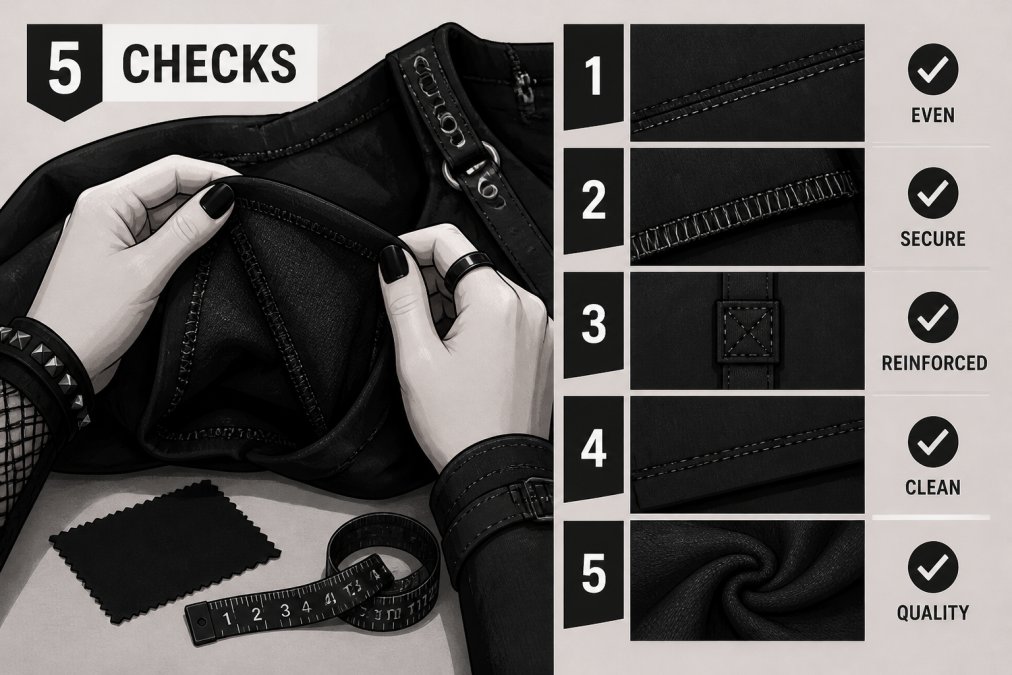
Run these five checks before you buy anything:
- Flip the seam. Turn the garment inside out. Tight, even stitching holds. Loose, wavy, or single-thread seams pull apart fast.
- Check the fabric weight. Thin, see-through material rarely survives real wear. Hold it to the light.
- Test the stretch. Gently pull a seam. If it gapes or the stitches crack, walk away.
- Look at the hem and lining. Clean, finished edges signal care. Frayed hems signal corner-cutting.
- Read the care tag. Natural fibers and sturdy blends hold up better than thin synthetics.
A common mistake is judging a garment by the outside only. The inside tells the truth. If you're ordering custom pieces, knowing how to measure for custom clothing that fits right helps you choose the right size.
Cost Per Wear Clothing: The Math That Exposes Overpriced Labels
Cost per wear clothing is the number that settles the expensive-versus-cheap argument. The formula is simple: divide the total cost of ownership by the number of times you'll actually wear the piece. Total cost of ownership means the purchase price plus repairs, alterations, and care, minus any resale value you recover.
A cheap item you wear twice costs more per wear than a pricier piece you wear fifty times. That's the whole game. The Consumer Federation of America's guidance on smart buying makes the same point about value over sticker price.
| Garment | Price | Repairs/Alterations | Resale Recovery | Net Cost | Realistic Wears | Cost Per Wear |
|---|---|---|---|---|---|---|
| Fast-fashion dress | $30 | $0 | $0 | $30 | 3 | $10.00 |
| Mid-range alt piece | $90 | $15 (hem + button) | $0 | $105 | 40 | $2.63 |
| Custom statement piece | $200 | $25 (lining repair) | $40 | $185 | 80 | $2.31 |
| Thrifted vintage jacket | $18 | $30 (tailoring) | $0 | $48 | 60 | $0.80 |
Look at that table again. The "expensive" custom piece and the "cheap" dress land in very different places once you count wears, repairs, and resale. Durability is what drives the math. A garment that holds its shape and color keeps paying you back.
Three variables decide whether a higher upfront price pays off:
- Expected wears. Be honest. A statement coat you wear twice a week from October to March beats a trend piece you wear to one party.
- Repair and replacement frequency. Cheap seams fail in the wash; a $15 hem repair on a $90 piece can erase its advantage over a $30 throwaway if it happens twice.
- Resale and consignment. Some well-made alt pieces hold resale value on resale platforms; fast-fashion pieces often don't.
When Affordable Alternative Clothing Beats the Expensive Stuff
Affordable alternative clothing wins in more cases than the luxury crowd admits. Cheap isn't a dirty word when you shop with a plan.
Here's where budget pieces beat pricey ones:
- Trend experiments. Trying a bold new alt style? Spend little, learn fast.
- Layering basics. Tees, tights, and socks don't need a premium label.
- Secondhand and thrifting. Unique pieces at low cost, often better made than new fast fashion.
- Clearance hunting. End-of-season markdowns on solid pieces can beat full-price luxury.
The flip side matters too. Cheap construction shows up in the wash, in the fit, and in how fast a color fades. If you want a practical roadmap for shopping affordably without feeding fast fashion, read how to avoid fast fashion before your next haul.
For statement pieces you'll wear for years, cheap rarely wins. For everything else, it often does.
Sustainable Alternative Fashion: Does Paying More Actually Help?
Sustainable alternative fashion is where the price question gets messy. Paying more can support better labor and lower-impact materials. But a high price tag is not proof of ethics, and in alternative fashion the gap between real responsibility and branding is wider than in mainstream retail.
Many brands charge luxury prices while producing the same way as fast fashion. The label premium hides the reality. So how do you tell the difference?
- Ask where it's made. Vague answers are a red flag. A named factory, a city, or a small-batch studio is a better signal than "ethically sourced."
- Look for material transparency. Specific fibers beat "premium blend" claims. A tag that says 95% cotton / 5% elastane tells you more than one that says "luxury fabric."
- Check production scale. Small-batch and made-to-order work usually means less overproduction waste than seasonal mass runs.
- Read the Federal Trade Commission's green marketing guidelines on environmental claims. "Eco" and "sustainable" are regulated terms, and vague ones mean little. The FTC's Green Guides address when such claims need qualification.
- Ask about hardware and trims. In alternative fashion, metal hardware, printed panels, and layered construction are common. Ask whether hardware is replaceable and whether prints are screen-printed or heat-transferred, because heat transfers crack and peel long before the fabric fails.
The Environmental Protection Agency's textile waste data shows how much clothing ends up discarded each year. Buying fewer, better pieces you actually wear is the simplest fix. Paying more only helps if the piece lasts and the production is honest.
Here's the trade-off to keep in mind: a higher price can buy three different things, and only one of them is ethics.
- Better labor and materials. Real cost, real benefit. Look for named factories, specific fibers, and repair or alteration services.
- Small-batch construction. Made-to-order and limited runs reduce waste but raise unit cost. That premium is defensible.
- Branding and scarcity marketing. A logo, a drop schedule, or a "limited edition" tag adds price without adding durability or ethics.
For alternative fashion specifically, the most sustainable choice is often the piece you can repair. Prints, hardware, and unusual cuts are the first things to fail, so favor garments where those elements are serviceable rather than glued or sealed. Paying more helps when it buys repairability and honest materials. It doesn't help when it buys a story.
The Label Premium: What You're Really Paying For
The label premium is the chunk of a price tag that pays for the name, not the garment. Every brand has some. The question is how much of your money goes to cloth versus marketing.
What a price actually covers:
- Materials and construction. The part that matters.
- Design and labor. Fair pay costs more, and it should.
- Marketing and retail. Ads, storefronts, and influencers.
- The name itself. Pure label premium, no quality attached.
Our take: a premium is fine when it buys real craftsmanship. It's a tax when it buys nothing but a logo. Snarkeez is built around custom, one-of-a-kind pieces. If you want to see what a statement piece looks like, the Formorian Dreadcoat is one example.
Build a Dark Wardrobe That Lasts: Your Next Move
Building a dark wardrobe that lasts means buying fewer pieces and choosing each one with care. That's the throughline of this whole argument: value beats price, every time.
Ready to invest in pieces that hold up? Start with the steps to custom made alternative fashion online, and see how to build a dystopian wardrobe piece by piece. Snarkeez offers custom dystopian apparel. Snarkeez offers custom dystopian apparel for rebels who refuse generic fashion.
Get started with Snarkeez and build a wardrobe that actually reflects who you are.
Frequently Asked Questions
Does expensive clothing usually have better quality?
Not automatically. A higher price can reflect better fabric and construction, but it can also pay for marketing, packaging, or a brand name. Check the seams, fabric weight, and hardware before assuming cost equals quality. Some expensive alternative clothing uses the same factories and materials as mid-range brands, while some affordable pieces are built to last. The only reliable test is inspecting the garment itself.
How can you tell if alternative clothing is well made?
Turn the piece inside out and look at the seams: they should be tight, straight, and finished (not raw or fraying). Check that patterns line up at the seams, buttons and zippers feel solid, and the fabric has some weight without feeling stiff. Stretch the fabric gently to see if it recovers. For alternative clothing, also check that dark dyes are consistent and that embellishments like straps or buckles are securely attached.
Is expensive alternative clothing worth the money?
It depends on cost per wear. A $150 jacket you wear 50 times costs $3 per wear; a $40 jacket that falls apart after five wears costs $8 per wear. Expensive alternative clothing is worth it when the construction holds up, the fit is right, and you will actually wear it often. If you are buying for a single event or a trend, affordable options make more sense.
Can affordable alternative clothing be high quality?
Yes. Price and quality are not perfectly linked. Some smaller independent brands keep prices lower by selling direct online, skipping retail markups, or using deadstock fabric. Look for detailed product photos, measurements, and reviews that mention durability. Affordable alternative clothing can be well made, but you need to check the same construction details you would on a expensive piece.